SF-002.9-NACOSS-Gold-approval-criteria-Oct-2024
The document “SF-002.9-NACOSS-Gold-approval-criteria-Oct-2024” outlines the criteria for companies seeking NACOSS Gold approval, which encompasses the surveying, designing, installing, testing, commissioning, and maintaining of security systems. It details the necessary standards, codes of practice, and general criteria that must be met, including management experience, financial stability, and operational premises requirements. Additionally, it specifies guidelines for compliance, insurance, staff qualifications, and customer communication, ensuring that approved companies adhere to high standards of security and service quality.
Read MoreSF-006-Issue-3-ARC-Gold-approval-criteria-Oct-18-1
The document “SF-006-Issue-3-ARC-Gold-approval-criteria-Oct-18-1” outlines the criteria for obtaining NSI ARC Gold approval for Alarm Receiving Centres (ARCs). It details requirements related to premises, equipment, management experience, financial stability, and compliance with industry standards and legal regulations. The document emphasizes the importance of maintaining high operational standards and provides guidelines for assessing compliance with the approval criteria.
Read MoreECHO-Bulletin-Dec-24
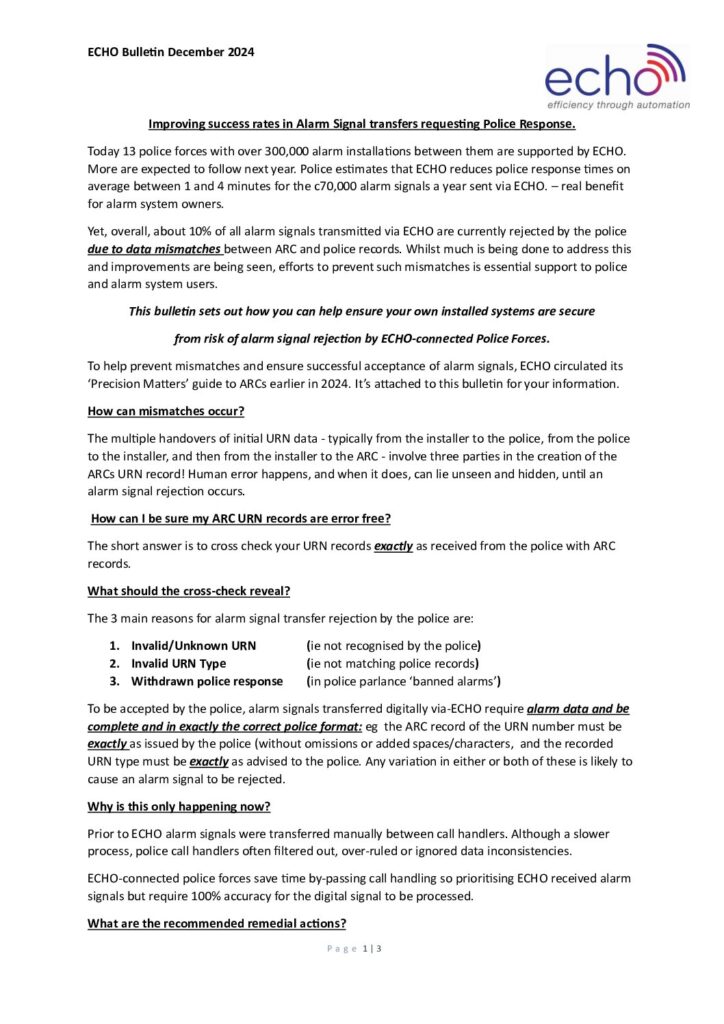
The ECHO Bulletin for December 2024 addresses the improvement of success rates in alarm signal transfers requesting police response. It highlights that while ECHO supports 13 police forces and reduces response times by 1 to 4 minutes for approximately 70,000 annual alarm signals, about 10% are rejected due to data mismatches. The bulletin emphasizes the importance of accurate URN records and provides recommended actions for installers to prevent mismatches, ensuring successful acceptance of alarm signals by police forces.
Read MoreECHO-Precision-Matters-Improving-Accuracy-in-Alarm-Transfers-June-2024b

The document “ECHO-Precision-Matters-Improving-Accuracy-in-Alarm-Transfers-June-2024b” outlines a review of over 26,000 automated alarm activations to enhance the accuracy of alarm transfers. Key findings indicate that failures primarily stem from incorrectly formatted or invalid URN types and instances where police response has been withdrawn due to false alarms. The document provides recommended actions for addressing these issues, including verifying URN formats and liaising with installers to ensure compliance with police requirements.
Read MoreNSI-logo-Guidelines-April-2021-Issue-4
The “NSI-logo-Guidelines-April-2021-Issue-4” document outlines the guidelines for the usage of the National Security Inspectorate (NSI) approval logos. It details the requirements for referencing NSI approval, including permissions, responsible use, and specific conditions for logo application across various media. Compliance with these guidelines is mandatory for all NSI approved companies to ensure brand integrity and prevent misuse.
Read MoreFire-Gold-Buyers-Guide-21-LR
How-to-create-your-Company-Page-on-LinkedIn-1

The document provides a step-by-step guide on creating a Company Page on LinkedIn, emphasizing the prerequisites such as having a personal LinkedIn profile, a company website, and a verified company email. It outlines the benefits of establishing a Company Page, including enhancing professionalism, connecting with employees, and promoting services. Additionally, it details the process of setting up the page, optimizing content, and engaging with followers to increase brand visibility and engagement on the platform.
Read MoreHow-to-promote-your-NSI-approval-on-Linkedin
The document “How to Promote your NSI Approval on LinkedIn” provides guidelines for NSI approved companies to effectively showcase their certification on LinkedIn. It emphasizes the importance of tagging NSI in posts, using relevant hashtags, and engaging with NSI’s content to enhance visibility and credibility within the security and fire safety sectors. Additionally, it offers sample posts and encourages participation in industry awards and events to further promote NSI approval.
Read MoreEAS-001-Issue-1-Evacuation-Alert-Systems-Gold-Approval-Criteria-Aug-2020
The document “EAS-001-Issue-1-Evacuation-Alert-Systems-Gold-Approval-Criteria-Aug-2020” outlines the criteria for obtaining Gold approval for Evacuation Alert Systems (EAS) as established by the National Security Inspectorate (NSI). It details requirements related to company premises, management experience, financial stability, maintenance services, and compliance with relevant standards and regulations. The criteria are intended for companies seeking EAS Gold approval and emphasize the importance of maintaining high operational standards and customer communication.
Read MoreESF-102-Issue-1-EMS-Gold-Criteria-for-Approval-May-2018
The document “ESF-102-Issue-1-EMS-Gold-Criteria-for-Approval-May-2018” outlines the criteria and guidelines for obtaining EMS Gold approval, applicable to companies seeking or holding this designation. Key areas of focus include prerequisites for approval, the reputation of management, financial stability, legal obligations regarding environmental legislation, and compliance with ISO 14001 standards. Companies must demonstrate adherence to these criteria to maintain their EMS Gold status.
Read More