
NCP-115-Code of Practice-for-the-Design-Installation-and-Maintenance-of-Scafolding-Alarm-Systems-Jan-2013
The “NCP-115 Code of Practice for the Design, Installation and Maintenance of Scaffolding Alarm Systems” outlines the standards and requirements for scaffolding alarm systems to ensure effective security measures against unauthorized access. It details the design and installation processes, categorizing systems into basic and enhanced types, and emphasizes the importance of site safety, proper documentation, and ongoing maintenance. Compliance with this code is mandatory for companies seeking NSI approval and is intended to guide stakeholders in selecting and maintaining appropriate alarm systems for scaffolding structures.
Read MoreNCP-120.1-Supplementary-Code-of-Practice-for-the-Planning-Installation-Commissioning-and-Maintenance-of-Intruder-Alarms-Nov-2021
The “NCP-120 Supplementary Code of Practice for the Planning, Installation, Commissioning and Maintenance of Intruder Alarms” outlines essential guidelines for managing intruder alarm systems, including their planning, installation, and maintenance. It emphasizes compliance with relevant British Standards and provides detailed procedures for preventative and corrective maintenance, ensuring systems operate effectively and meet safety regulations. The document also includes forms for recording system parameters and completion certificates for client acknowledgment.
Read MoreSSQS-101.9-Quality-Schedule-for-the-Application-of-BS-ISO-9001-2015-to-the-NACOSS-Gold-Approval-Scheme-Nov-2024
The document “SSQS-101.9 – Quality Schedule for the Application of BS-ISO 9001:2015 to the NACOSS Gold Approval Scheme” outlines the requirements for organizations seeking NACOSS Gold approval in the electronic security systems sector. It emphasizes compliance with the BS EN ISO 9001:2015 quality management standard, detailing criteria for the design, installation, commissioning, and maintenance of security systems, and mandates that all personnel involved must be security-screened and competent. The latest issue reflects updates to relevant British and European standards, ensuring organizations adhere to best practices in quality management and customer satisfaction.
Read MoreNSI-Regulations-Annex-4-Issue-2-Electronic-Security-Mar-2024
The document “NSI-Regulations-Annex-4-Issue-2-Electronic-Security-Mar-2024” outlines additional regulations for companies holding NSI ‘NACOSS Gold’ and ‘Systems Silver’ approvals, specifically concerning the issuance of NSI Certificates of Compliance for security system installations. It details the responsibilities of approved companies in issuing certificates, maintaining installations, and the conditions under which certificates can be issued or modified. The regulations also address the obligations related to customer agreements and the conditions for taking over installations from non-approved companies.
Read MoreNSI-Regulations-Issue-15-May-2024
The “NSI Regulations Issue 15 May 2024” document outlines the requirements and procedures for companies seeking NSI approval in the fire, security, and related facilities management sectors. It details the application process, eligibility criteria, responsibilities of approved companies, and the conditions under which NSI approval may be granted, maintained, or withdrawn. Additionally, the document addresses ongoing compliance, fees, and the appeals process for decisions made by the NSI.
Read MoreNSI-Regulations-Annex-1-Definitions-Issue-2-July-2017
The document “NSI-Regulations-Annex-1-Definitions-Issue-2-July-2017” provides a comprehensive list of definitions relevant to the regulations governing NSI approved companies. Key terms include ‘Adjudicator,’ ‘Certification body,’ ‘NSI approval,’ and various types of services related to fire, security, and facilities management. This annex serves as a foundational reference for understanding the terminology used within the NSI regulatory framework.
Read MoreNSI-Regulations-Annex-2-Issue-4-NSI-Schemes-Aug-2020-1
The document “NSI Regulations Annex 2 Issue 4” outlines the various types of approvals available for NSI Approved Companies in the fire, security, and facilities management sectors. It details the scope of company activities and the levels of approval (Gold or Silver) across multiple schemes, including Electronic Security Systems, Guarding Services, Alarm Receiving Centres, and various fire safety and management systems. This document serves as a guideline for companies seeking NSI certification and compliance.
Read MoreNSI-Regulations-Annex-3-Issue-2-Fees-and-Costs-Feb-2021-1
The document titled “NSI-Regulations-Annex-3-Issue-2-Fees-and-Costs-Feb-2021-1” outlines the maximum limits for certain fees and costs applicable to NSI Approved Companies. Key points include a cancellation fee capped at £1,500 plus VAT for each working man-day lost, an appeal deposit not exceeding £3,000 plus VAT, and a maximum award of costs against a company set at £5,000, subject to any retained appeal deposit.
Read MoreNCP-104A-Issue-1-NCP-104.3-System-Design-Specification-Template-Dec-17-rev-Jun-2020
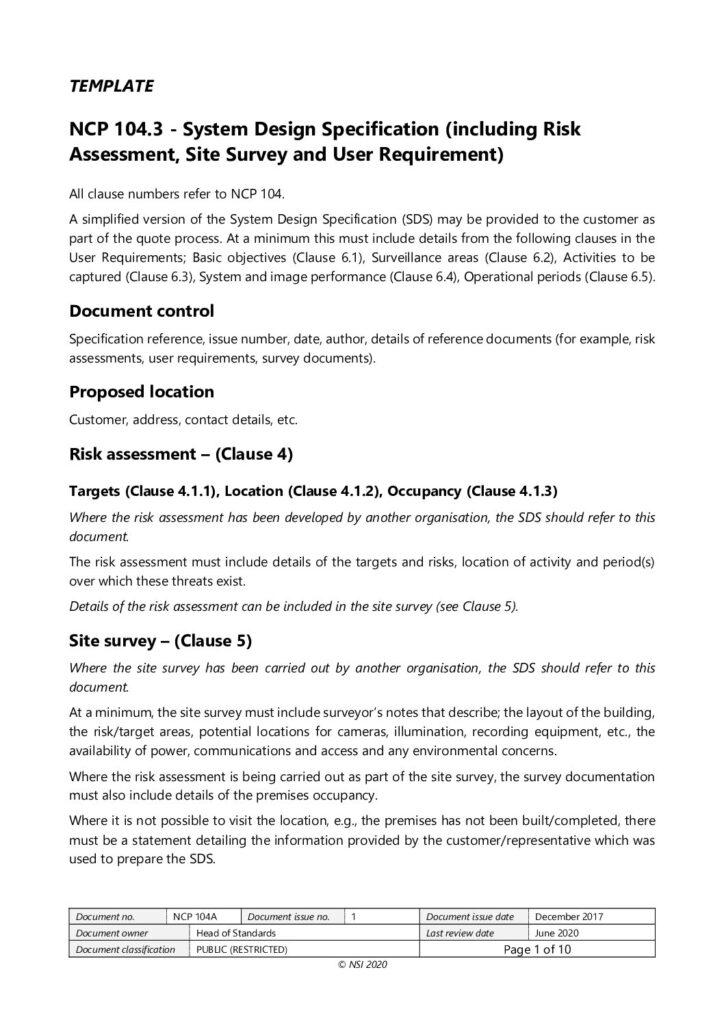
The document titled “NCP-104A-Issue-1-NCP-104.3-System-Design-Specification-Template-Dec-17-rev-Jun-2020” serves as a template for creating a System Design Specification (SDS) that includes essential components such as Risk Assessment, Site Survey, and User Requirements. It outlines the necessary clauses to be addressed, including objectives, surveillance areas, system performance, and legal considerations, ensuring comprehensive documentation for security system design and implementation. The template also emphasizes the importance of validating user requirements and integrating risk assessments and site surveys into the design process.
Read MoreNCP-104B.1-NCP-104.3-System-Design-Specification-Template-Worked-Example-Jul-18-rev-Jun-2020
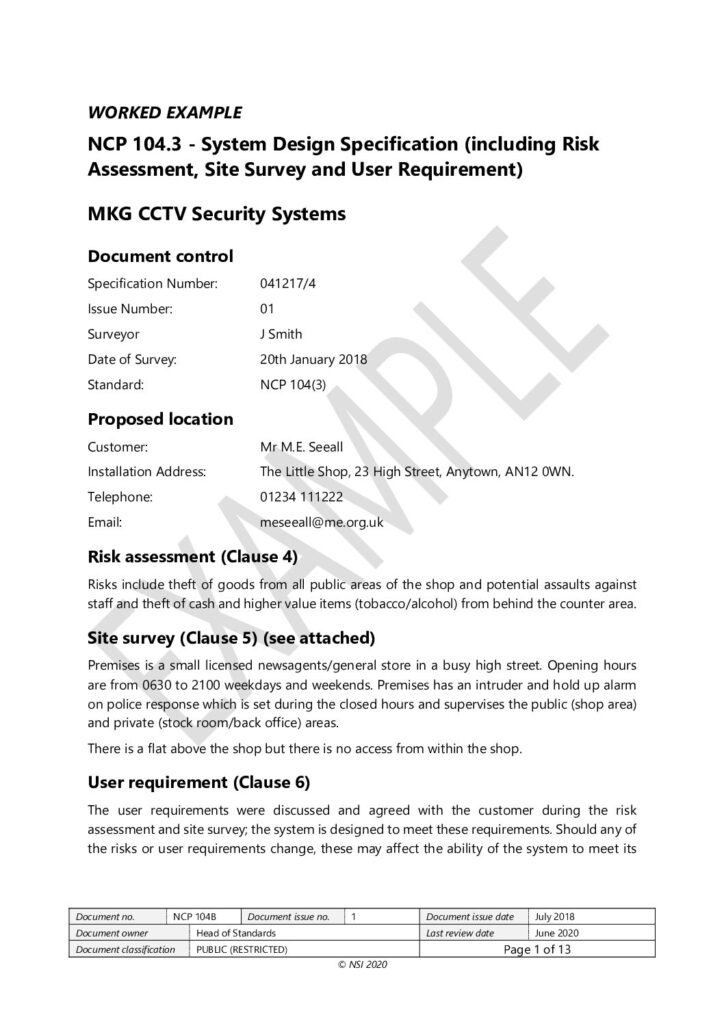
The document “NCP-104B.1-NCP-104.3-System-Design-Specification-Template-Worked-Example-Jul-18-rev-Jun-2020” provides a comprehensive worked example of a System Design Specification (SDS) for a CCTV security system at a retail location. It includes detailed sections on risk assessment, site survey, user requirements, and system design, outlining the necessary equipment, operational parameters, and compliance with data protection regulations. The document serves as a template for developing specifications tailored to similar security system installations.
Read More