NSI-Regulations-Annex-1-Definitions-Issue-2-July-2017
The document “NSI-Regulations-Annex-1-Definitions-Issue-2-July-2017” provides a comprehensive list of definitions relevant to the regulations governing NSI approved companies. Key terms include ‘Adjudicator,’ ‘Certification body,’ ‘NSI approval,’ and various types of services related to fire, security, and facilities management. This annex serves as a foundational reference for understanding the terminology used within the NSI regulatory framework.
Read MoreNSI-Regulations-Annex-2-Issue-4-NSI-Schemes-Aug-2020-1
The document “NSI Regulations Annex 2 Issue 4” outlines the various types of approvals available for NSI Approved Companies in the fire, security, and facilities management sectors. It details the scope of company activities and the levels of approval (Gold or Silver) across multiple schemes, including Electronic Security Systems, Guarding Services, Alarm Receiving Centres, and various fire safety and management systems. This document serves as a guideline for companies seeking NSI certification and compliance.
Read MoreNSI-Regulations-Annex-3-Issue-2-Fees-and-Costs-Feb-2021-1
The document titled “NSI-Regulations-Annex-3-Issue-2-Fees-and-Costs-Feb-2021-1” outlines the maximum limits for certain fees and costs applicable to NSI Approved Companies. Key points include a cancellation fee capped at £1,500 plus VAT for each working man-day lost, an appeal deposit not exceeding £3,000 plus VAT, and a maximum award of costs against a company set at £5,000, subject to any retained appeal deposit.
Read MoreNSF-713.2-Buddy-Agreement-Form-June-2024 (1)
The “NSF-713.2-Buddy-Agreement-Form-June-2024” outlines the terms and conditions for establishing a buddy system within the NSF framework. It includes sections on participant responsibilities, confidentiality agreements, and guidelines for effective collaboration. This form is intended to facilitate support and mentorship among participants in NSF programs.
Read MoreOP2-085.1-Requirement-for-use-of-a-Virtual-Office-Jun-2024
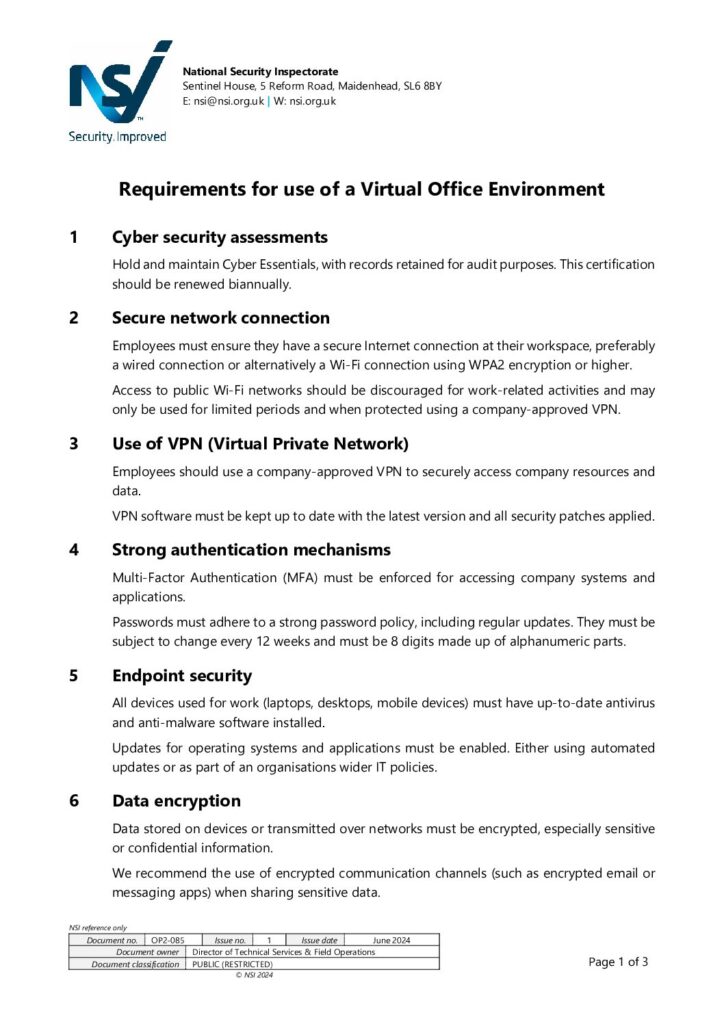
The document “OP2-085.1-Requirement-for-use-of-a-Virtual-Office-Jun-2024” outlines essential cybersecurity and operational requirements for employees working in a virtual office environment. Key points include maintaining Cyber Essentials certification, ensuring secure internet connections, implementing multi-factor authentication, and using company-approved cloud storage for data. Additionally, it emphasizes the importance of regular security training, incident response planning, and compliance with data protection regulations.
Read MoreMSF-586.27-Services-British-Standards-and-NSI-Code-of-Practice-Jul-2022
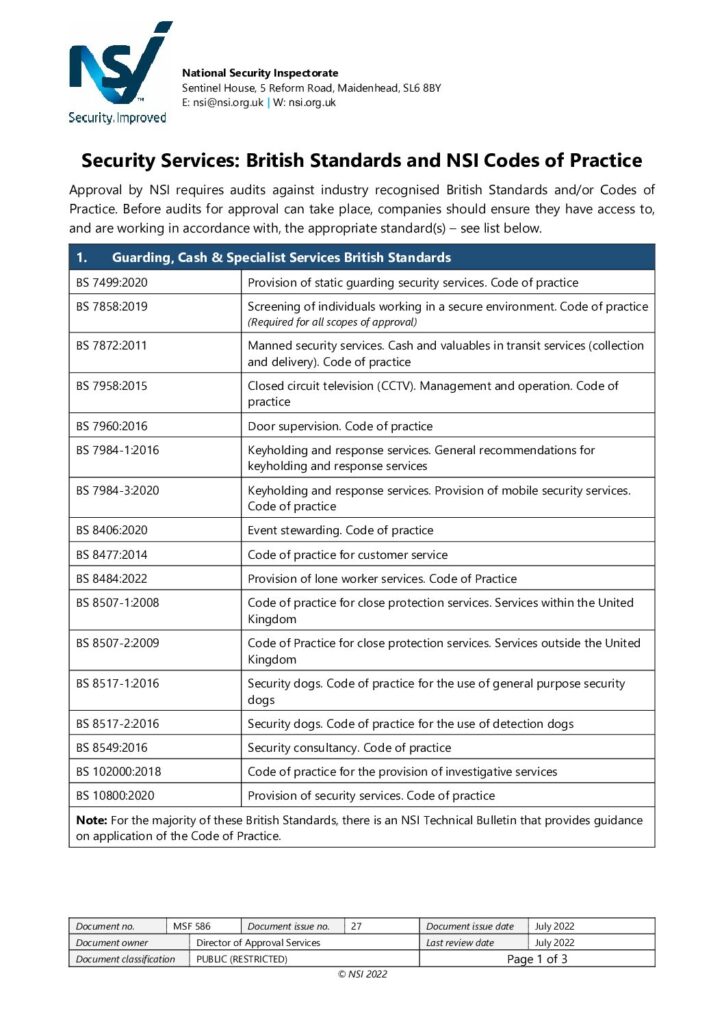
The document “MSF-586.27-Services-British-Standards-and-NSI-Code-of-Practice-Jul-2022” outlines the requirements for NSI approval audits against recognized British Standards and NSI Codes of Practice for security services. It details specific standards relevant to various security services, including guarding, cash handling, and CCTV management, and emphasizes the necessity for companies to comply with these standards prior to undergoing audits. Additionally, it provides information on accessing British Standards and NSI Codes of Practice for approved companies.
Read MoreNSI-Technical-Bulletin-No-0063-Publication-of-BS-8484_2022
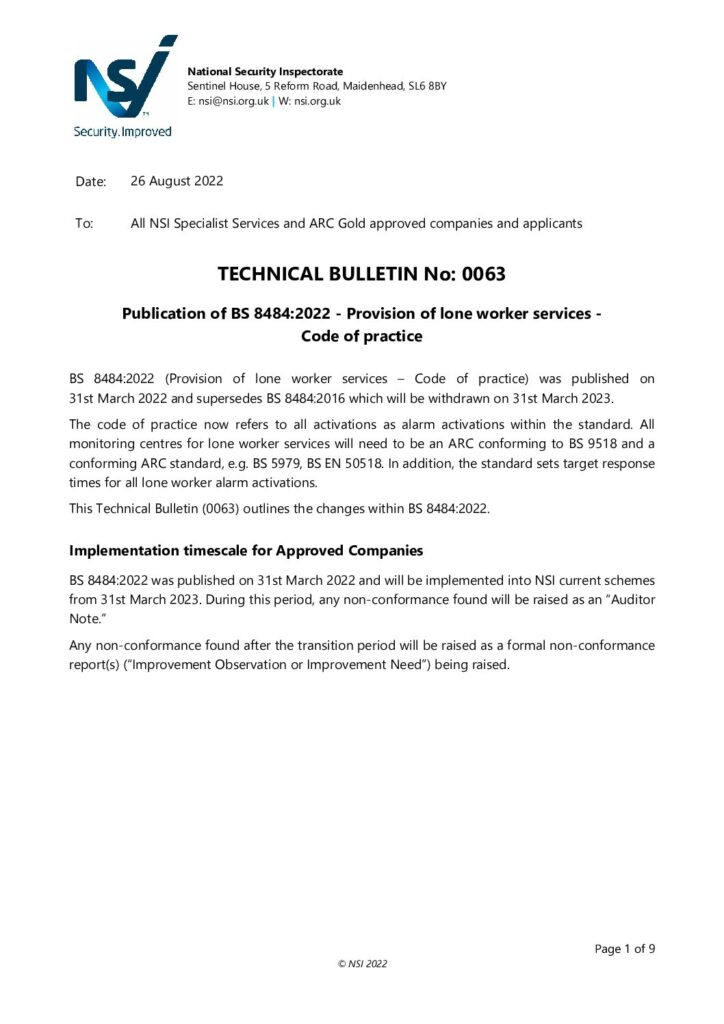
The document is a Technical Bulletin (No. 0063) from the National Security Inspectorate, detailing the publication of BS 8484:2022, which provides a code of practice for lone worker services. This new standard, published on March 31, 2022, supersedes BS 8484:2016 and introduces changes such as the categorization of all activations as alarm activations and the requirement for monitoring centers to conform to specific standards. Implementation of the new code will begin on March 31, 2023, with non-conformance issues being noted during the transition period.
Read More