
PUBLICATION OF BS 5839-6:2019 FIRE DETECTION AND FIRE ALARM SYSTEMS FOR BUILDINGS
This circular announces the publication of BS 5839-6:2019, which came into effect on April 30, 2019, superseding the previous version. It outlines the changes in standards for fire detection and alarm systems and provides information on how to obtain the new standard.
Read MorePD 6662:2017 – ACTIVE INFRA-RED BEAMS (CONCESSION)
This circular letter addresses the challenges in obtaining compliant active infra-red beams as per PD 6662:2017. It provides a temporary concession allowing the use of beams compliant with BS 4737-3.12:1978 while highlighting the need for manufacturers to issue compliance statements for their products.
Read MorePUBLICATION OF BS EN 50131 – 1:2006 – A3:2020 – ALARM SYSTEMS. INTRUSION AND HOLD-UP SYSTEMS. SYSTEM REQUIREMENTS
This circular letter introduces NSI Technical Bulletin No. 0054 detailing changes to BS EN 50131 – 1:2006 with the publication of its 2020 edition. Key changes include updates to product standards and the introduction of new terms related to tamper detection requirements.
Read MorePUBLICATION OF BS 5839-6:2019+A1:2020 CODE OF PRACTICE FOR THE DESIGN, INSTALLATION, COMMISSIONING AND MAINTENANCE OF FIRE DETECTION AND FIRE ALARM SYSTEMS IN DOMESTIC PREMISES
This circular letter introduces the NSI Technical Bulletin No. 0056 regarding the publication of BS 5839-6:2019+A1:2020, which addresses concerns about children not waking from fire alarms. It outlines the immediate implementation requirements for NSI Fire Gold and Silver approved companies.
Read MoreREQUEST FOR ARC RECEIVER NUMBERS TO SUPPORT ALL IP TRANSITION
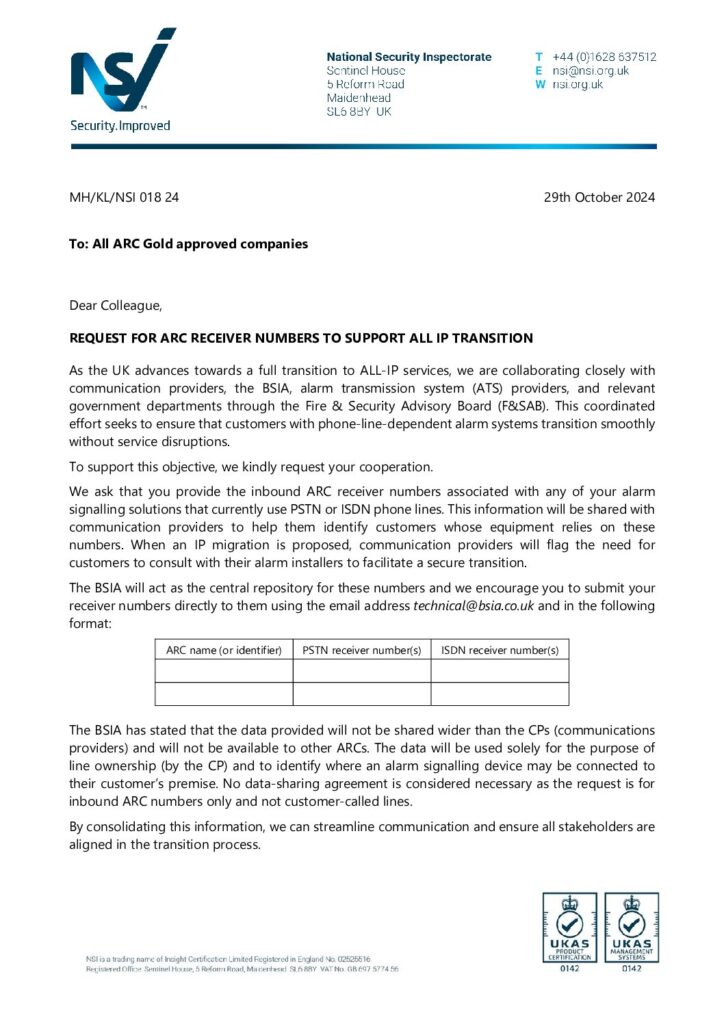
This circular letter requests cooperation from all ARC Gold approved companies to provide inbound ARC receiver numbers associated with alarm signalling solutions that use PSTN or ISDN phone lines. This information is crucial for a smooth transition to ALL-IP services and will be managed by the BSIA.
Read MorePUBLICATION OF BS 8243:2021 – DESIGN, INSTALLATION AND CONFIGURATION OF INTRUDER AND HOLD-UP ALARM SYSTEMS DESIGNED TO GENERATE CONFIRMED ALARM CONDITIONS. CODE OF PRACTICE
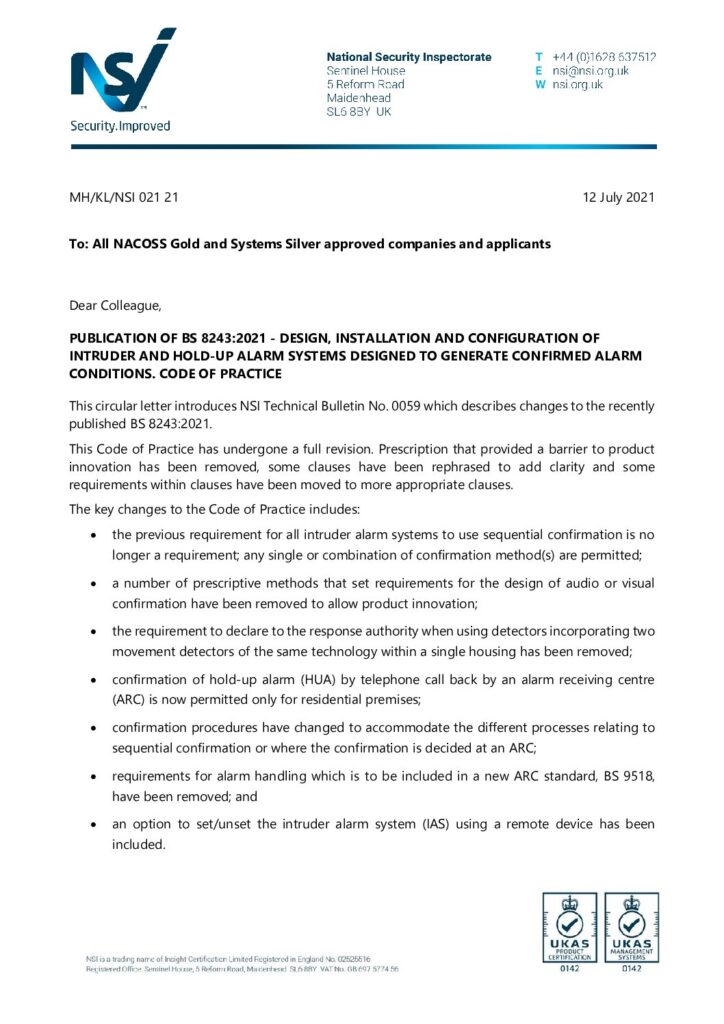
This circular letter introduces changes to the BS 8243:2021 Code of Practice for intruder and hold-up alarm systems. Key revisions include the removal of the sequential confirmation requirement and the introduction of new procedures for alarm handling. A 12-month transition period is provided for companies to adapt to the new standards.
Read MoreSELECTION AND CONFIGURATION OF MONITORING OPTIONS FOR AN INTRUDER AND HOLD – UP ALARM SYSTEM IN LINE WITH THE REQUIREMENTS OF PD 666 2:2017
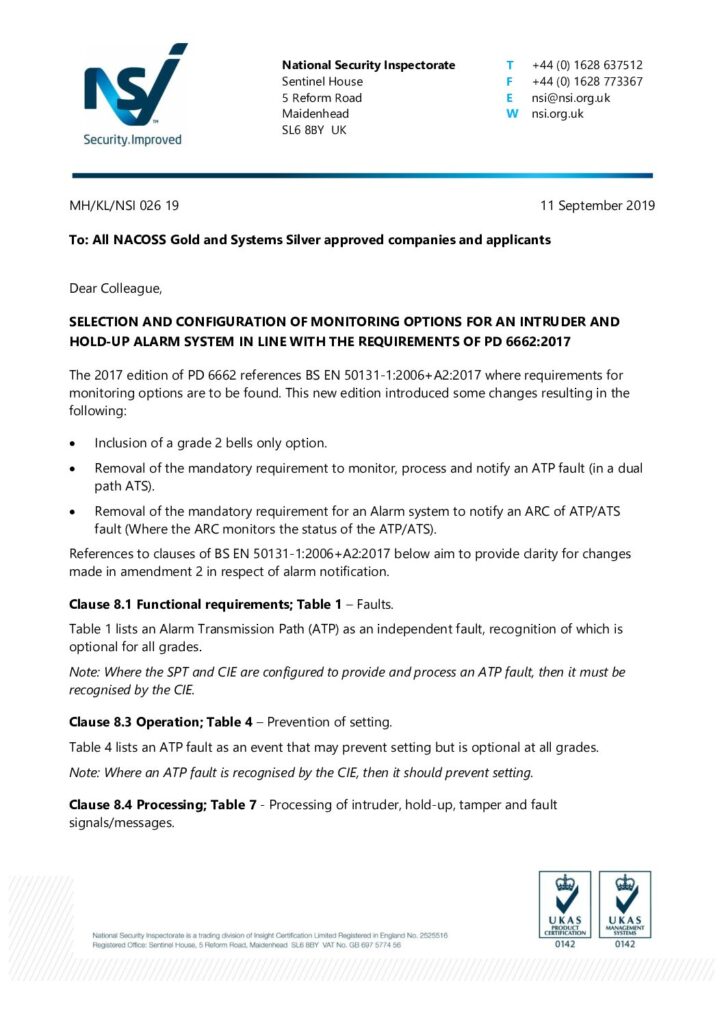
This circular letter outlines the changes introduced in the 2017 edition of PD 6662 regarding the selection and configuration of monitoring options for intruder and hold-up alarm systems. Key changes include the inclusion of a grade 2 bells only option and the removal of certain mandatory requirements for alarm systems.
Read MoreNCP-115-Code of Practice-for-the-Design-Installation-and-Maintenance-of-Scafolding-Alarm-Systems-Jan-2013
The “NCP-115 Code of Practice for the Design, Installation and Maintenance of Scaffolding Alarm Systems” outlines the standards and requirements for scaffolding alarm systems to ensure effective security measures against unauthorized access. It details the design and installation processes, categorizing systems into basic and enhanced types, and emphasizes the importance of site safety, proper documentation, and ongoing maintenance. Compliance with this code is mandatory for companies seeking NSI approval and is intended to guide stakeholders in selecting and maintaining appropriate alarm systems for scaffolding structures.
Read MoreNSF-670.7-Marking-Table-for-PD-6662-2017-BS-8243_2021-Alarms-Aug-2021
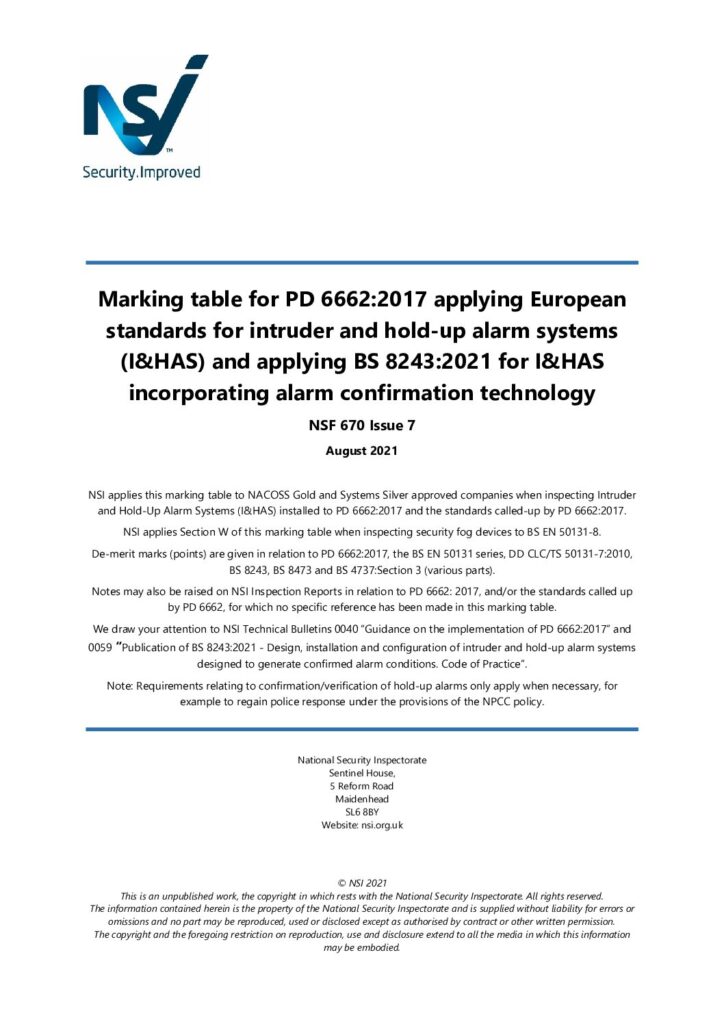
The document “NSF-670.7-Marking-Table-for-PD-6662-2017-BS-8243_2021-Alarms-Aug-2021” provides a comprehensive marking table for evaluating Intruder and Hold-Up Alarm Systems (I&HAS) in accordance with PD 6662:2017 and BS 8243:2021 standards. It outlines the inspection criteria, including various sections detailing system requirements, tamper protection, and alarm confirmation technology, and assigns de-merit points for deviations from these standards. This document serves as a guideline for the National Security Inspectorate when assessing compliance for approved companies.
Read MoreFSF-100.12-Fire-Standards-and-Codes-of-Practice-April-2024
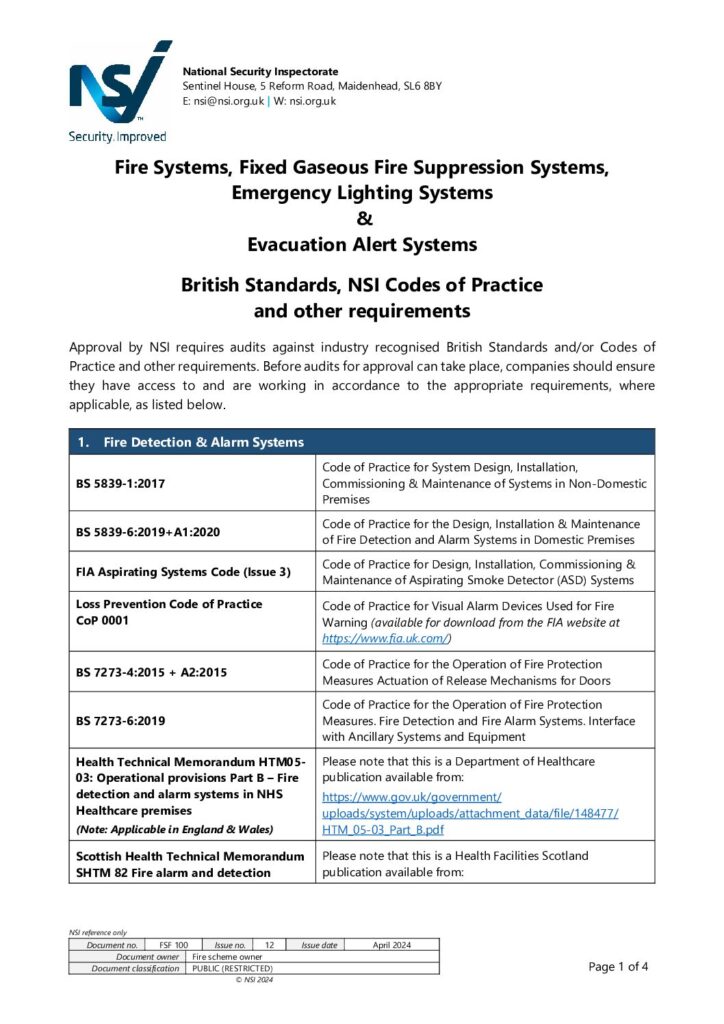
The document “FSF-100.12-Fire-Standards-and-Codes-of-Practice-April-2024” outlines the necessary British Standards and NSI Codes of Practice for fire safety systems, including fire detection and alarm systems, fixed gaseous fire suppression systems, emergency lighting, and evacuation alert systems. It emphasizes the importance of compliance with these standards for companies seeking NSI approval, detailing specific codes and guidelines that must be followed for the design, installation, commissioning, and maintenance of these systems. Additionally, it provides information on accessing relevant standards and codes for NSI-approved companies.
Read More