
Technical Bulletin No. 0071
BS 7671 (Amendment 4 – PoE) and BS 8214_2026 – Awareness for Approved Companies This bulletin raises awareness of two newly published standards and explains how they relate to existing NSI requirements: 1. BS 7671 Amendment 4 (2026) – Power over Ethernet (PoE) 2. BS 8214:2026 – Fire-Resisting and Smoke Control Doors Nacoss gold systems…
Read MoreAMENDMENT 1 TO EN 50136-2:2013
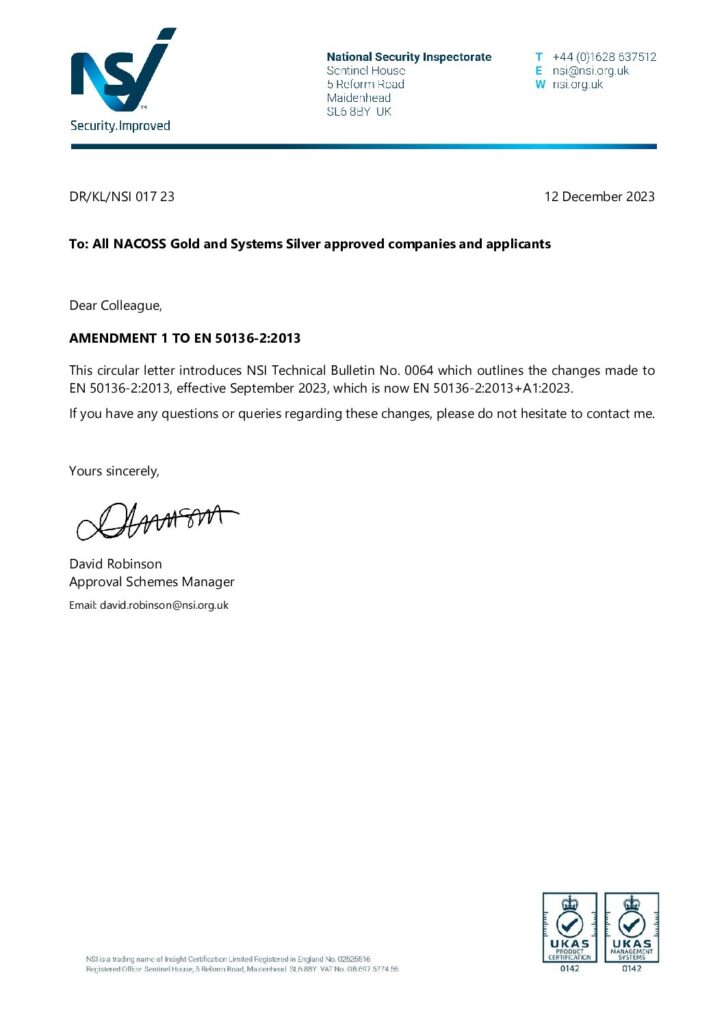
This circular letter introduces NSI Technical Bulletin No. 0064, detailing changes to EN 50136-2:2013, effective September 2023. Recipients are encouraged to reach out with any questions regarding these changes.
Read MoreFALSE HOLD-UP ALARMS

This circular addresses the issue of false hold-up alarms, which are a significant drain on police resources. It highlights a study by Essex Police that recorded numerous false calls and urges approved companies to take action to reduce these incidents.
Read MorePUBLICATION OF NSI NCP 109 ISSUE 4 – CODE OF PRACTICE FOR THE DESIGN, INSTALLATION, COMMISSIONING AND MAINTENANCE OF ACCESS CONTROL SYSTEMS

This circular announces the publication of the fourth edition of NSI Code of Practice NCP 109 for Access Control Systems, effective immediately. Existing approved companies must comply with this new code by September 30, 2025, while new applicants will be audited against it right away.
Read MoreCORRIGENDUM TO EN 50136-2:2013+A1:2023
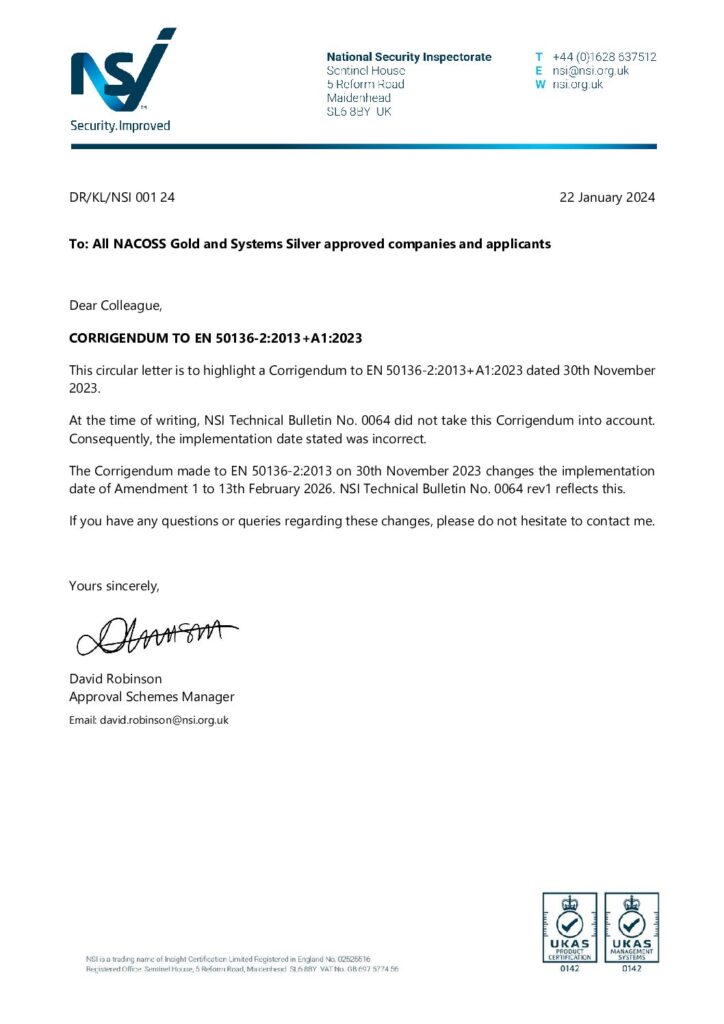
This circular letter highlights a Corrigendum to EN 50136-2:2013+A1:2023, which changes the implementation date of Amendment 1 to 13th February 2026. It also notes that NSI Technical Bulletin No. 0064 did not initially account for this change.
Read MoreTransition to E-Certificates and Phasing Out of Paper Certificates
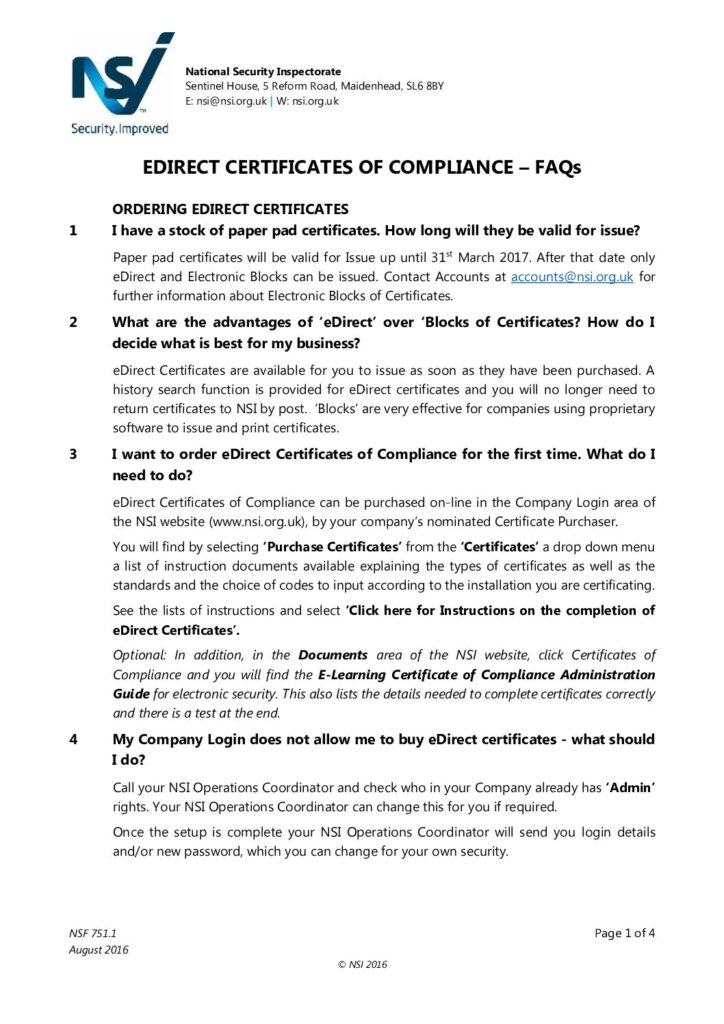
This circular serves as a reminder that NSI will only accept returns of issued paper certificates until March 31, 2017, after which only e-certificates will be available. The transition to e-certificates has been well-received by most approved companies, and key dates for this change are provided.
Read MorePUBLICATION OF BS EN 50131 – 1:2006 – A3:2020 – ALARM SYSTEMS. INTRUSION AND HOLD-UP SYSTEMS. SYSTEM REQUIREMENTS
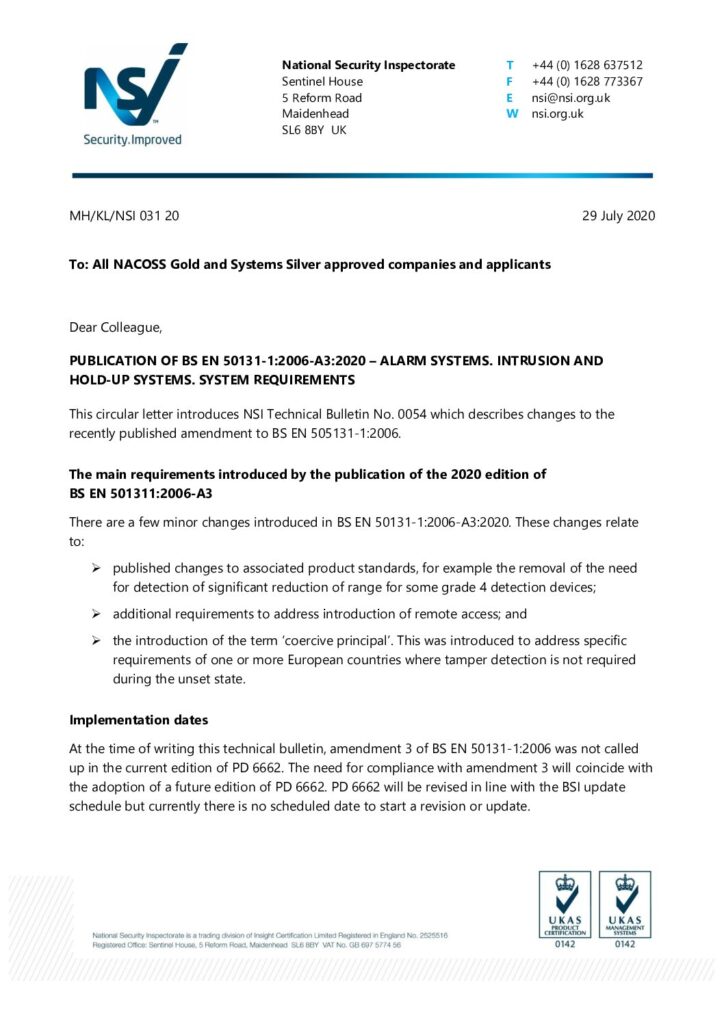
This circular letter introduces NSI Technical Bulletin No. 0054 detailing changes to BS EN 50131 – 1:2006 with the publication of its 2020 edition. Key changes include updates to product standards and the introduction of new terms related to tamper detection requirements.
Read MoreSELECTION AND CONFIGURATION OF MONITORING OPTIONS FOR AN INTRUDER AND HOLD – UP ALARM SYSTEM IN LINE WITH THE REQUIREMENTS OF PD 666 2:2017
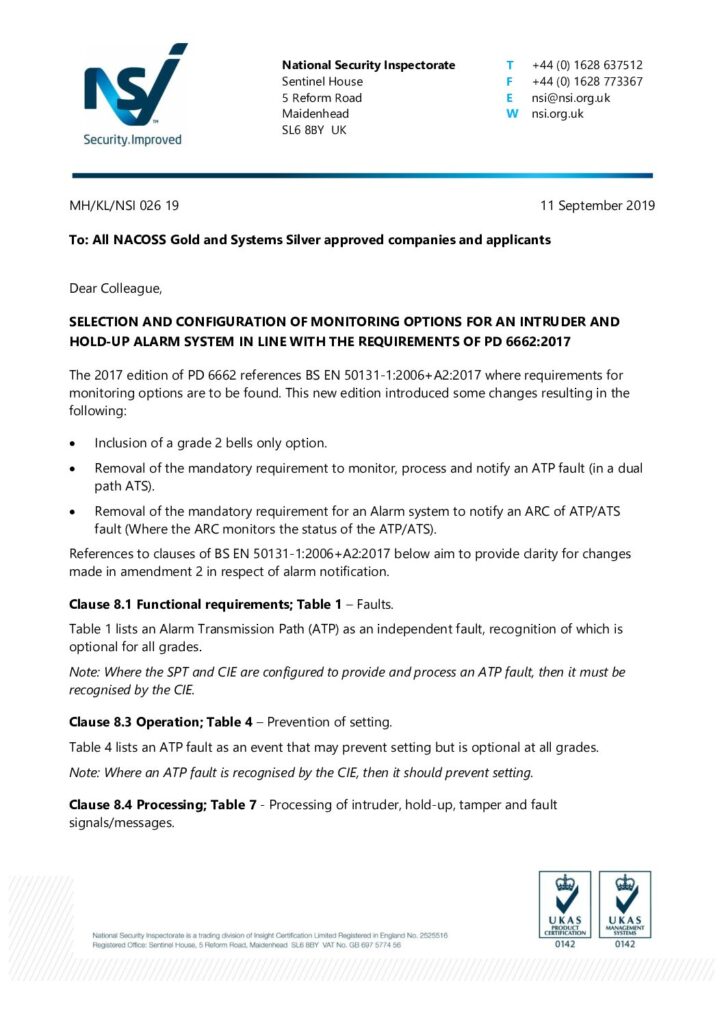
This circular letter outlines the changes introduced in the 2017 edition of PD 6662 regarding the selection and configuration of monitoring options for intruder and hold-up alarm systems. Key changes include the inclusion of a grade 2 bells only option and the removal of certain mandatory requirements for alarm systems.
Read MoreNEW CERTIFICATE OF COMPLIANCE FOR SECURITY SYSTEM MAINTENANCE TAKEOVERS
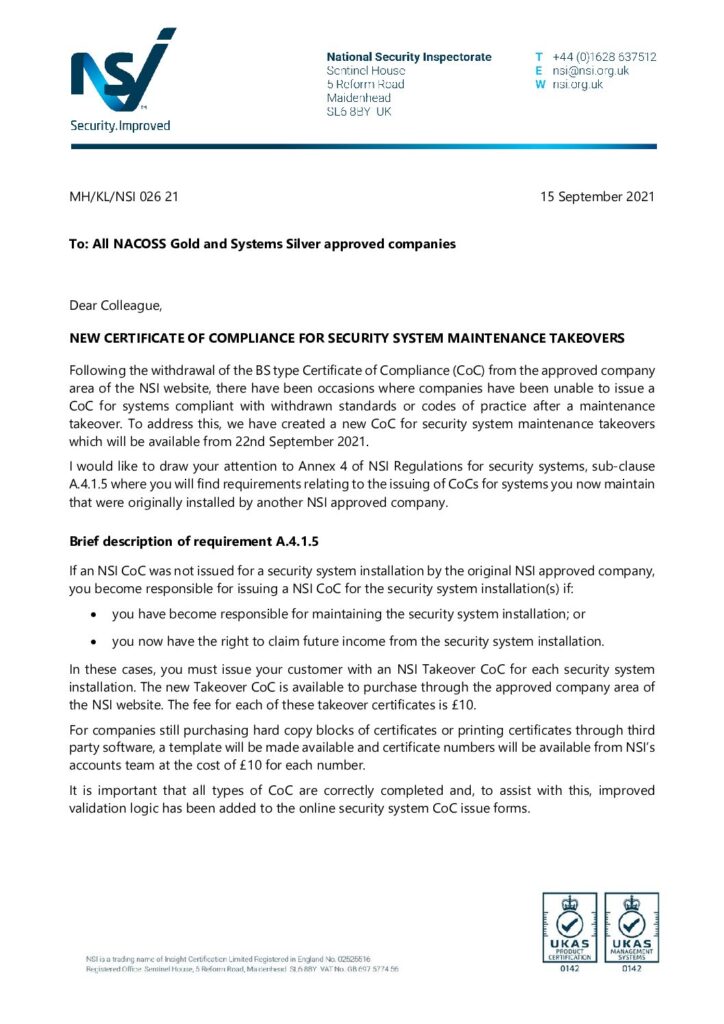
This circular letter announces the introduction of a new Certificate of Compliance (CoC) for security system maintenance takeovers, effective from 22nd September 2021. It outlines the responsibilities of companies regarding the issuance of CoCs for systems maintained after a takeover and provides information on the associated costs and validation logic improvements.
Read MorePUBLICATION OF A NEW NSI CODE OF PRACTICE FOR THE PLANNING, INSTALLATION, COMMISSIONING AND MAINTENANCE OF INTRUDER ALARMS, AND THE WITHDRAWAL OF NACP 11
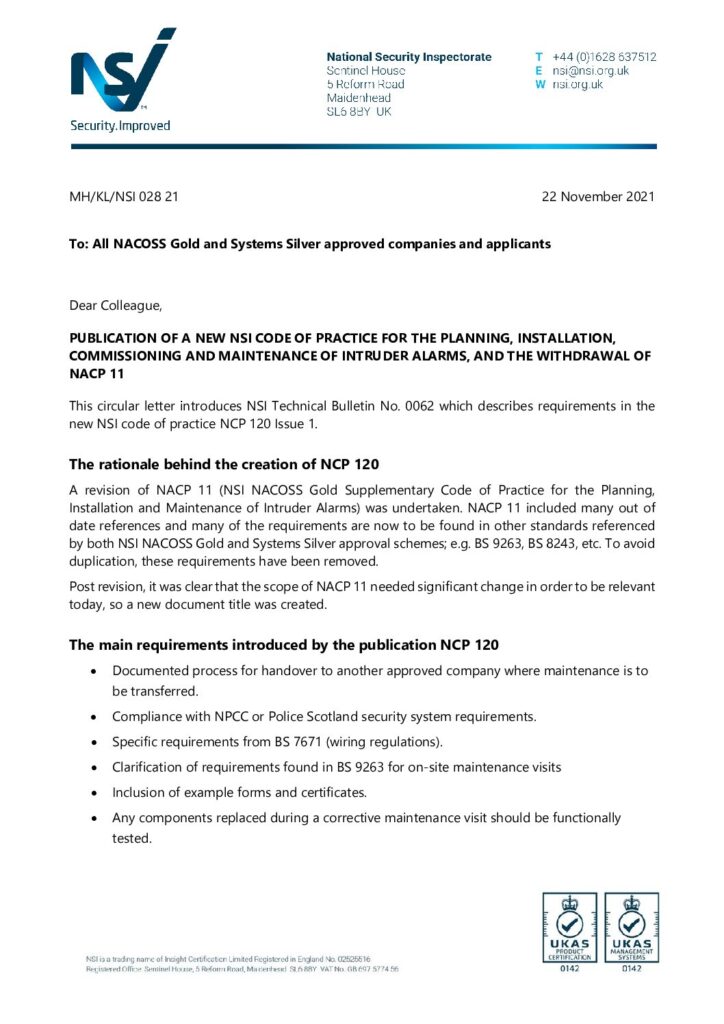
This circular letter announces the publication of a new NSI code of practice, NCP 120 Issue 1, which replaces the outdated NACP 11. It outlines the main requirements for compliance and sets implementation dates for both new and approved companies.
Read More