
NSI Quality Schedule ELSQS 122 – BS EN ISO 9001:2015
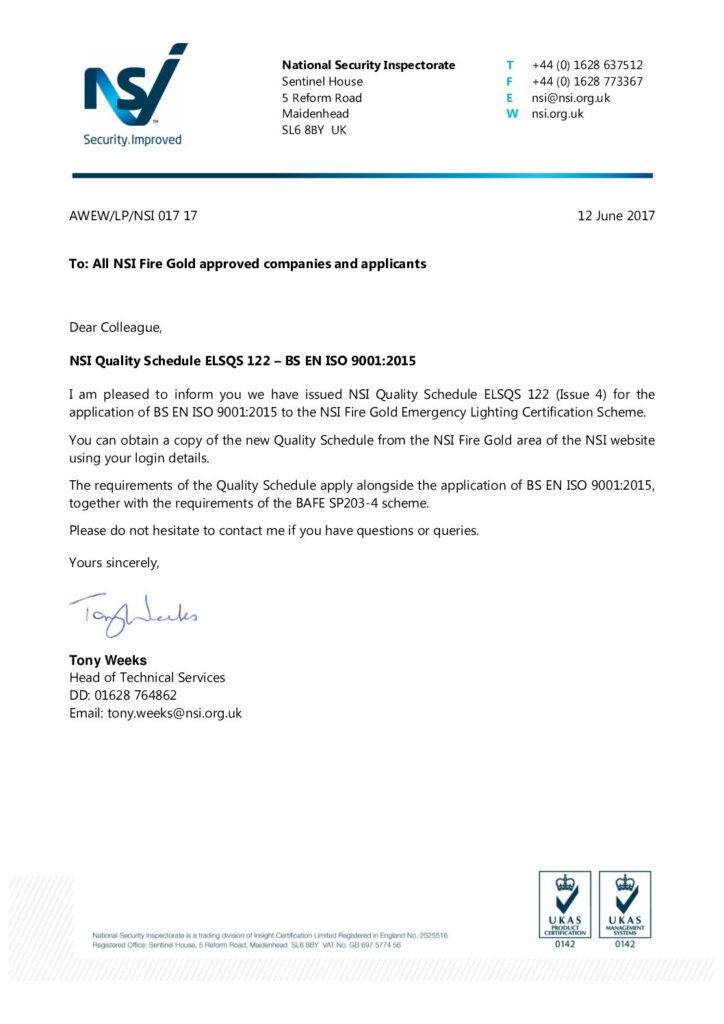
This circular letter informs NSI Fire Gold approved companies and applicants about the issuance of NSI Quality Schedule ELSQS 122 (Issue 4) for BS EN ISO 9001:2015. It provides guidance on obtaining the new schedule and outlines its application alongside existing requirements.
Read MoreSELECTION AND CONFIGURATION OF MONITORING OPTIONS FOR AN INTRUDER AND HOLD – UP ALARM SYSTEM IN LINE WITH THE REQUIREMENTS OF PD 666 2:2017
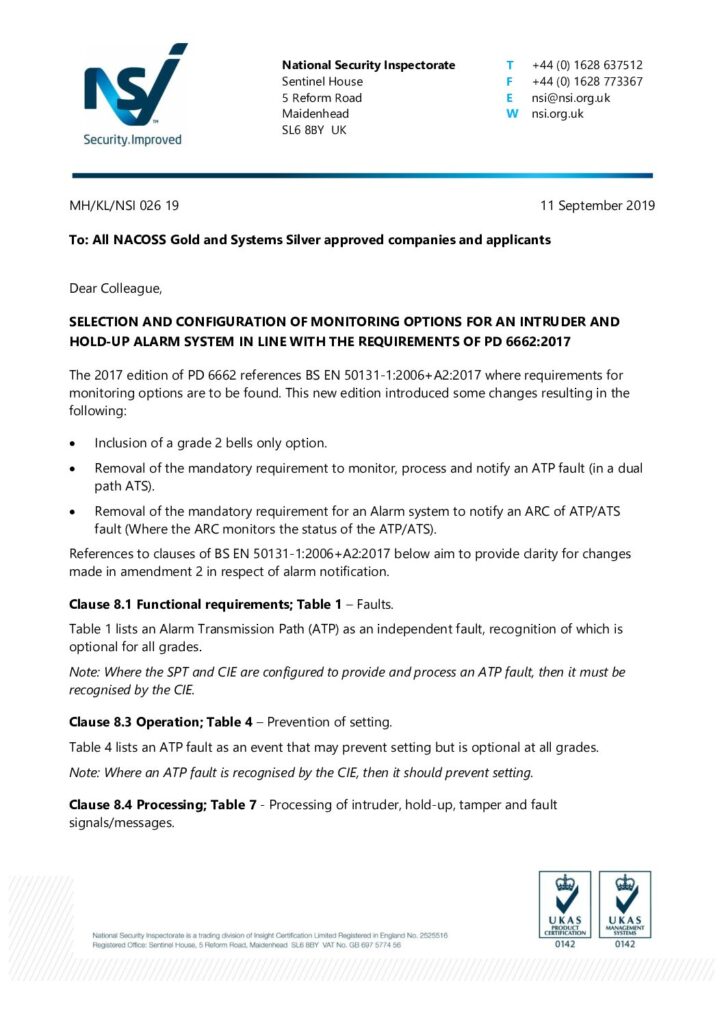
This circular letter outlines the changes introduced in the 2017 edition of PD 6662 regarding the selection and configuration of monitoring options for intruder and hold-up alarm systems. Key changes include the inclusion of a grade 2 bells only option and the removal of certain mandatory requirements for alarm systems.
Read MorePUBLICATION OF BS 5306-8:2023 – FIRE EXTINGUISHING INSTALLATIONS AND EQUIPMENT ON PREMISES – PART 8: SELECTION AND POSITIONING OF PORTABLE FIRE EXTINGUISHERS – CODE OF PRACTICE
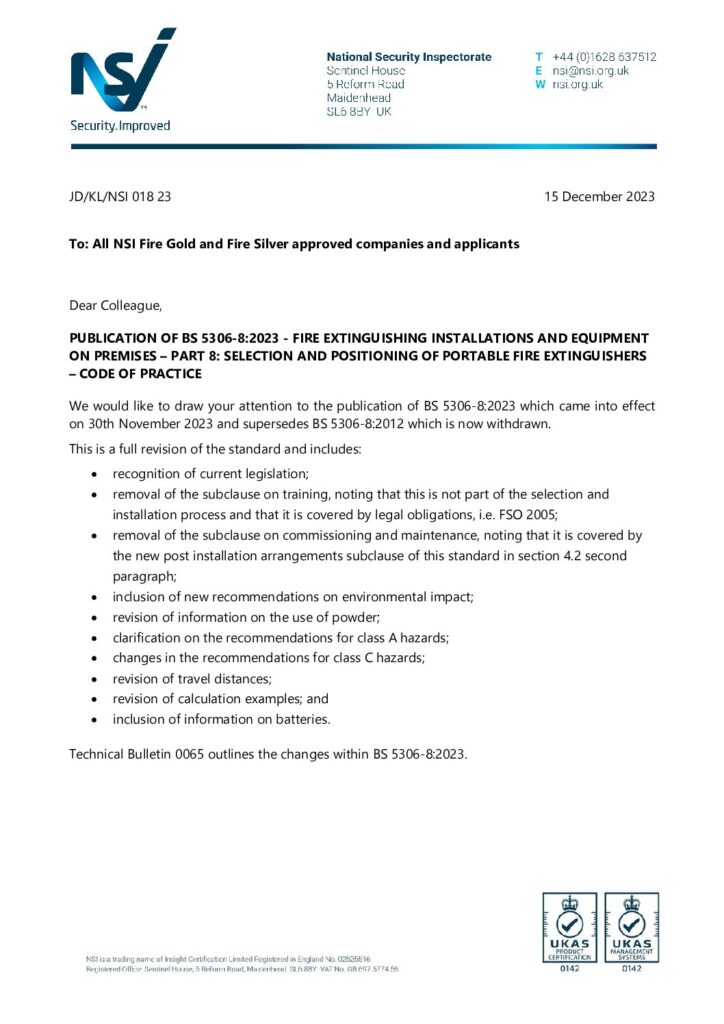
This circular letter announces the publication of BS 5306-8:2023, which supersedes the previous standard and outlines significant revisions, including new recommendations and changes in compliance requirements. Approved companies have until June 30, 2024, to transition to the new standard, with specific arrangements for new applicants and existing companies.
Read MoreNEW CERTIFICATE OF COMPLIANCE FOR SECURITY SYSTEM MAINTENANCE TAKEOVERS
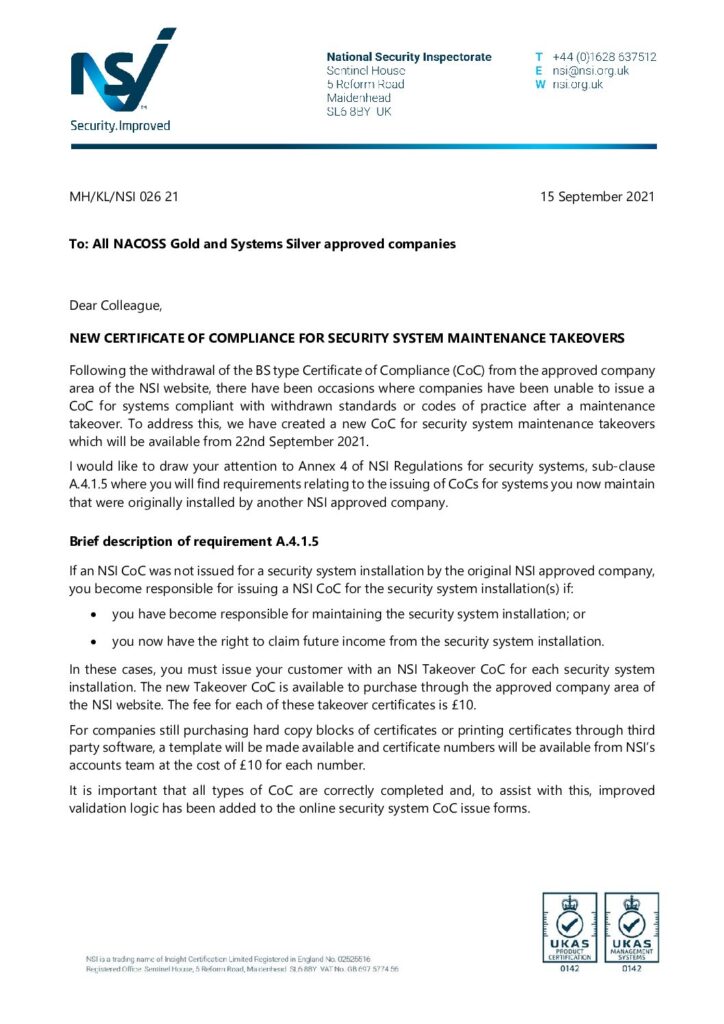
This circular letter announces the introduction of a new Certificate of Compliance (CoC) for security system maintenance takeovers, effective from 22nd September 2021. It outlines the responsibilities of companies regarding the issuance of CoCs for systems maintained after a takeover and provides information on the associated costs and validation logic improvements.
Read MoreREQUEST FOR ARC RECEIVER NUMBERS TO SUPPORT ALL IP TRANSITION
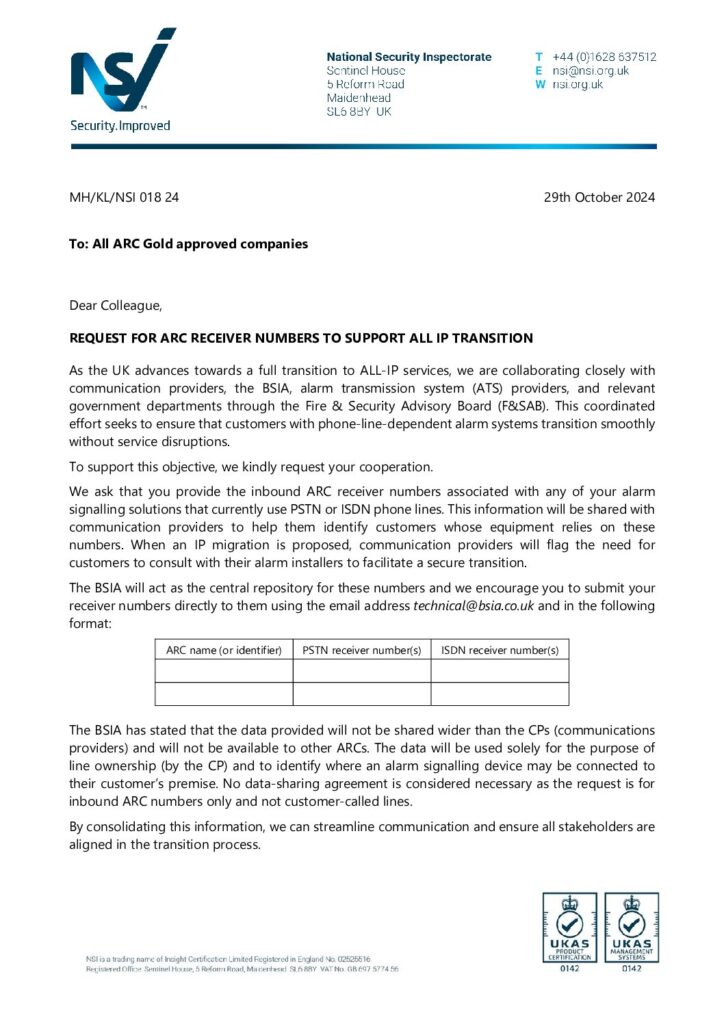
This circular letter requests cooperation from all ARC Gold approved companies to provide inbound ARC receiver numbers associated with alarm signalling solutions that use PSTN or ISDN phone lines. This information is crucial for a smooth transition to ALL-IP services and will be managed by the BSIA.
Read MorePUBLICATION OF BS 5306-3:2017
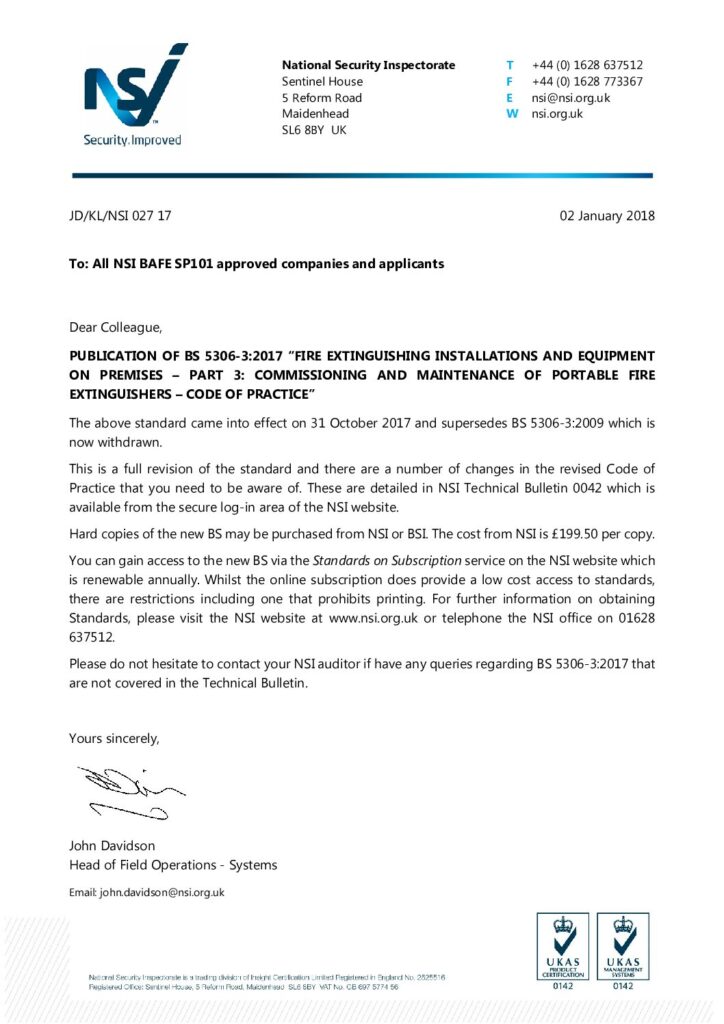
This circular announces the publication of BS 5306-3:2017, which came into effect on 31 October 2017, superseding the previous version. It highlights the availability of the new standard and provides information on how to obtain it, including the option for online subscription.
Read MorePUBLICATION OF BS 5266-1:2016 EMERGENCY LIGHTING – CODE OF PRACTICE FOR THE EMERGENCY LIGHTING OF PREMISES
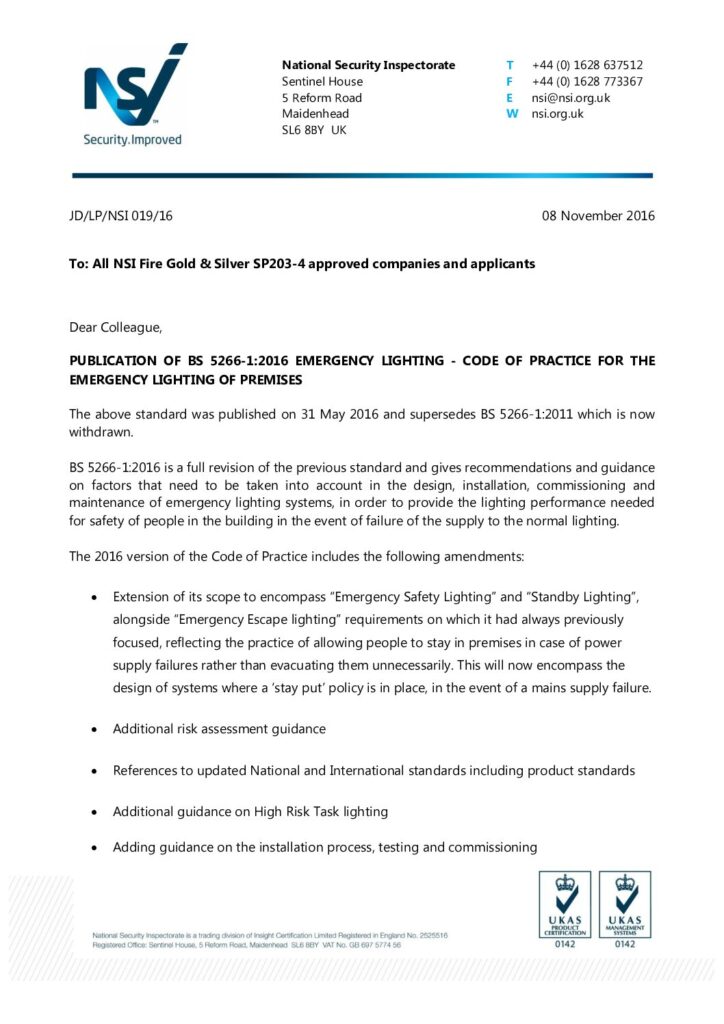
This circular letter announces the publication of BS 5266-1:2016, which supersedes the previous standard BS 5266-1:2011. It outlines the amendments and requirements for the design, installation, commissioning, and maintenance of emergency lighting systems to ensure safety in the event of power supply failures.
Read MorePUBLICATION OF BS 7499:2020 CODE OF PRACTICE FOR THE PROVISION OF STATIC GUARDING SECURITY SERVICES
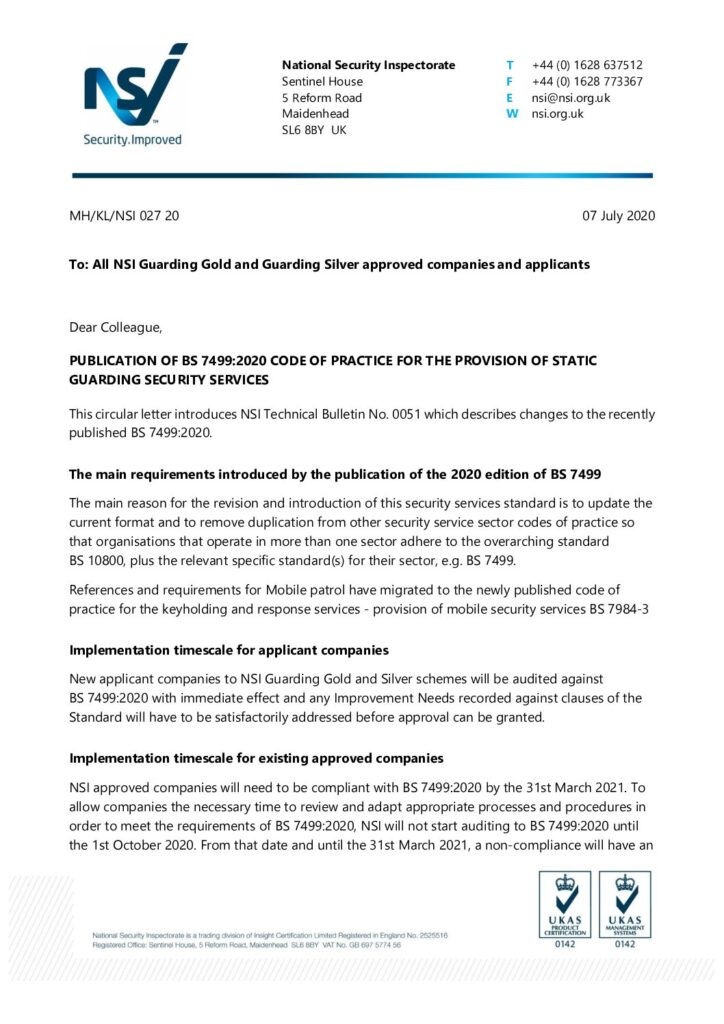
This circular letter introduces changes to the recently published BS 7499:2020, which updates the current format and removes duplication from other security service sector codes. New applicant companies will be audited against the standard immediately, while existing approved companies must comply by March 31, 2021.
Read MoreUPDATES TO ICP 1 – IMPLEMENTATION OF ISSUE 10
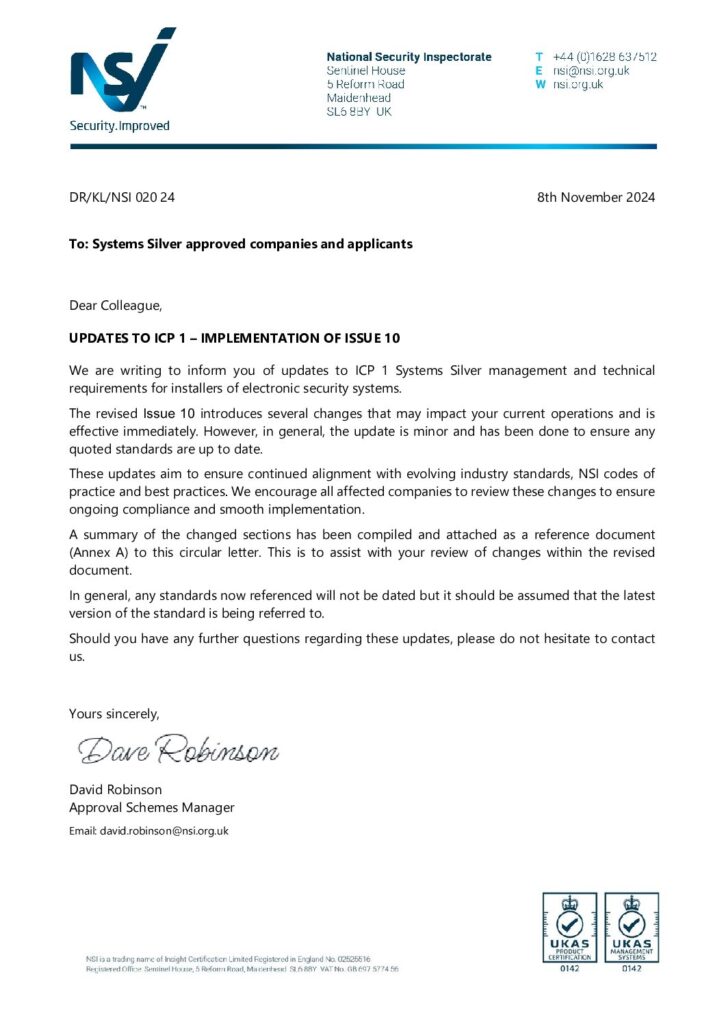
This circular informs Systems Silver approved companies and applicants about updates to ICP 1, specifically the implementation of Issue 10. The changes are minor and aim to align with current industry standards, and companies are encouraged to review these updates for compliance.
Read MorePUBLICATION OF BS 7984 – 3 CODE OF PRACTICE FOR THE PROVISION OF MOBILE SECURITY SERVICES (KEYHOLDING AND RESPONSE SERVICES)
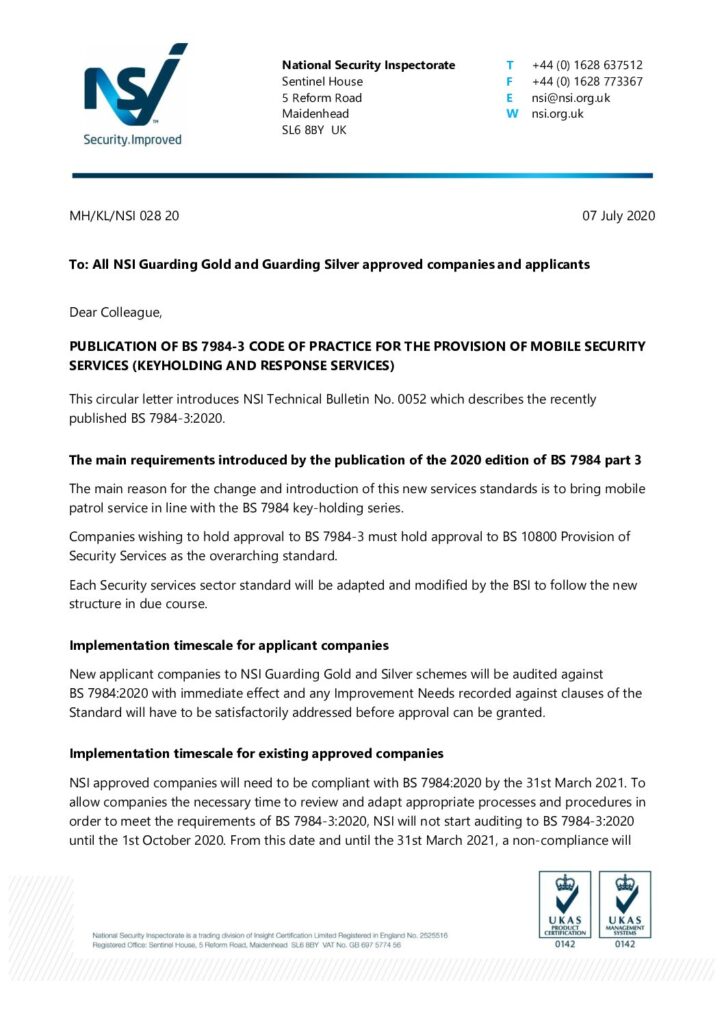
This circular letter announces the publication of BS 7984 – 3:2020, which outlines the standards for mobile security services. It details the implementation timelines for both new and existing NSI approved companies, emphasizing the need for compliance by March 31, 2021.
Read More