
NSI-Technical-Bulletin-No-0046-Information-regarding-carrying-out-of-routine-preventive-maintenance-visits-2
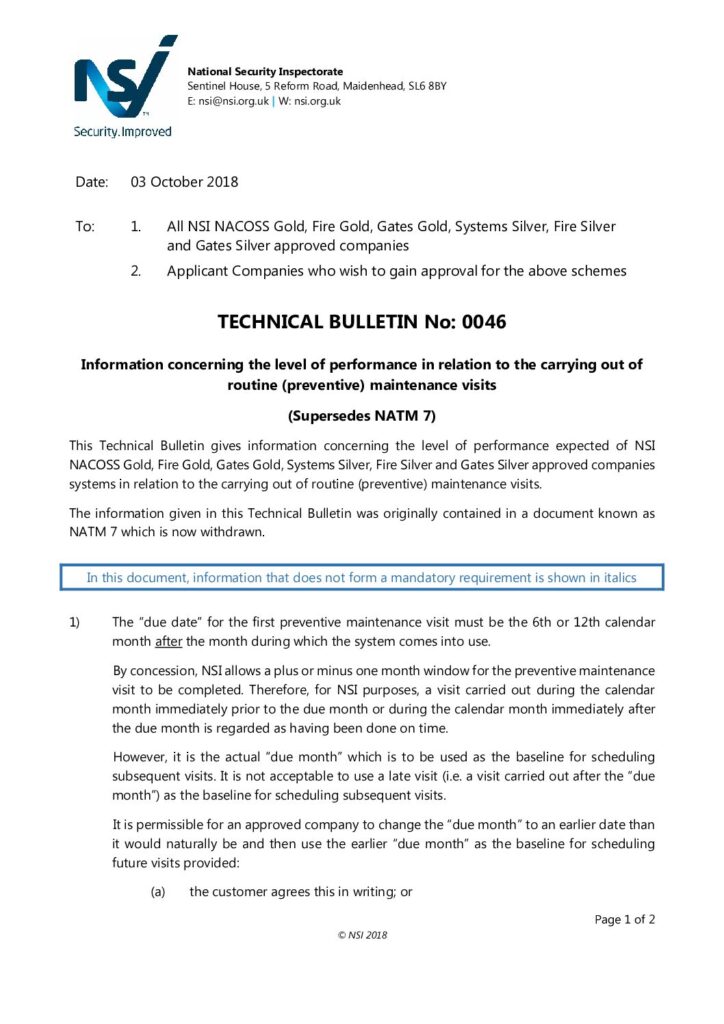
This Technical Bulletin provides guidelines for NSI-approved companies regarding the performance expectations for routine preventive maintenance visits. It outlines the scheduling of these visits, including acceptable timeframes and conditions for rescheduling, as well as procedures for handling access issues. Additionally, it details the evaluation process during surveillance audits and the implications of failing to meet preventive maintenance commitments, emphasizing the importance of maintaining a high level of compliance. Manual review may be needed for complete details.
Read MoreTech-Bulletin-0015-BS50131-1-2006
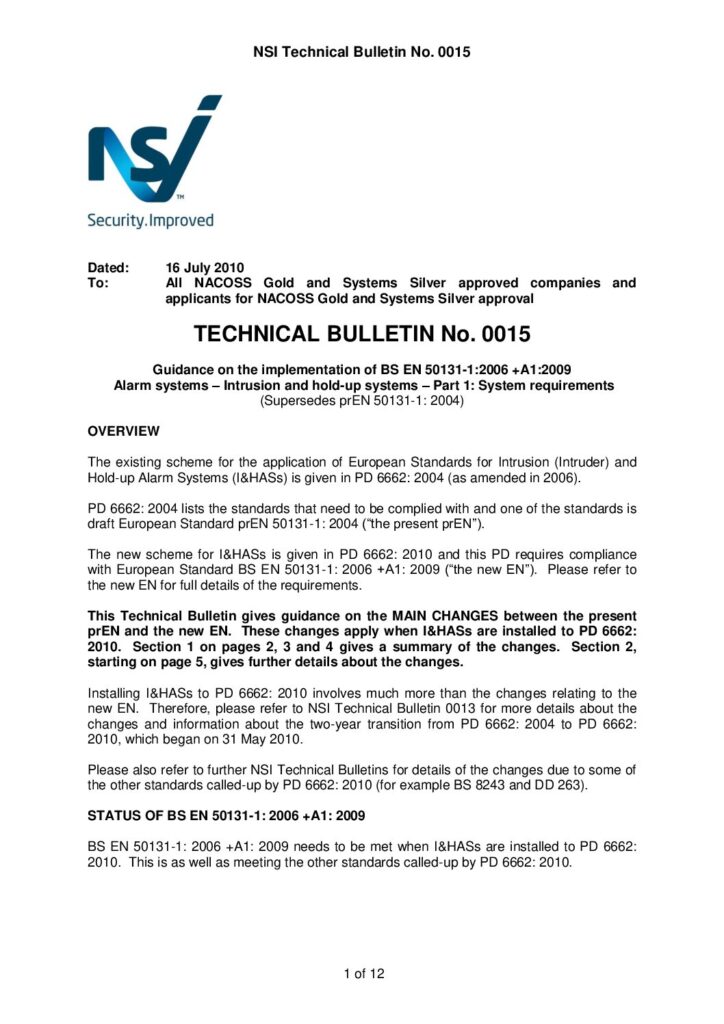
NSI Technical Bulletin No. 0015 provides guidance on the implementation of BS EN 50131-1:2006 +A1:2009, which outlines system requirements for intrusion and hold-up alarm systems. The bulletin details significant changes from the previous standard, including updates on environmental conditions for components, fault recognition, user access levels, and event recording requirements. Compliance with the new standard is mandatory for installations following PD 6662:2010, and further information can be found in the accompanying sections of the bulletin. Manual review is recommended for complete details.
Read MoreTech-Bulletin-0016-DD-263-2010
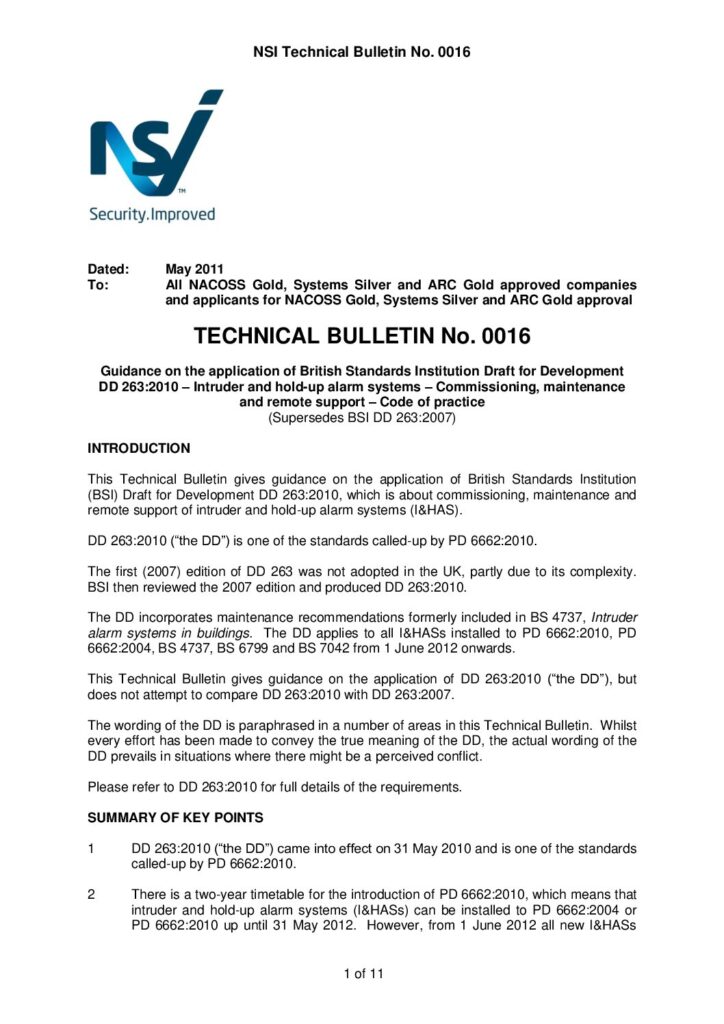
NSI Technical Bulletin No. 0016 provides guidance on the application of the British Standards Institution Draft for Development DD 263:2010, which outlines the commissioning, maintenance, and remote support of intruder and hold-up alarm systems (I&HAS). Effective from June 1, 2012, all I&HAS installations must comply with this standard, which harmonizes maintenance practices and includes detailed requirements for preventative and corrective maintenance, commissioning, and remote support functions. For full compliance and operational details, reference to the complete DD 263:2010 is recommended.
Read MoreTech-Bulletin-0017-BS-8484-2009
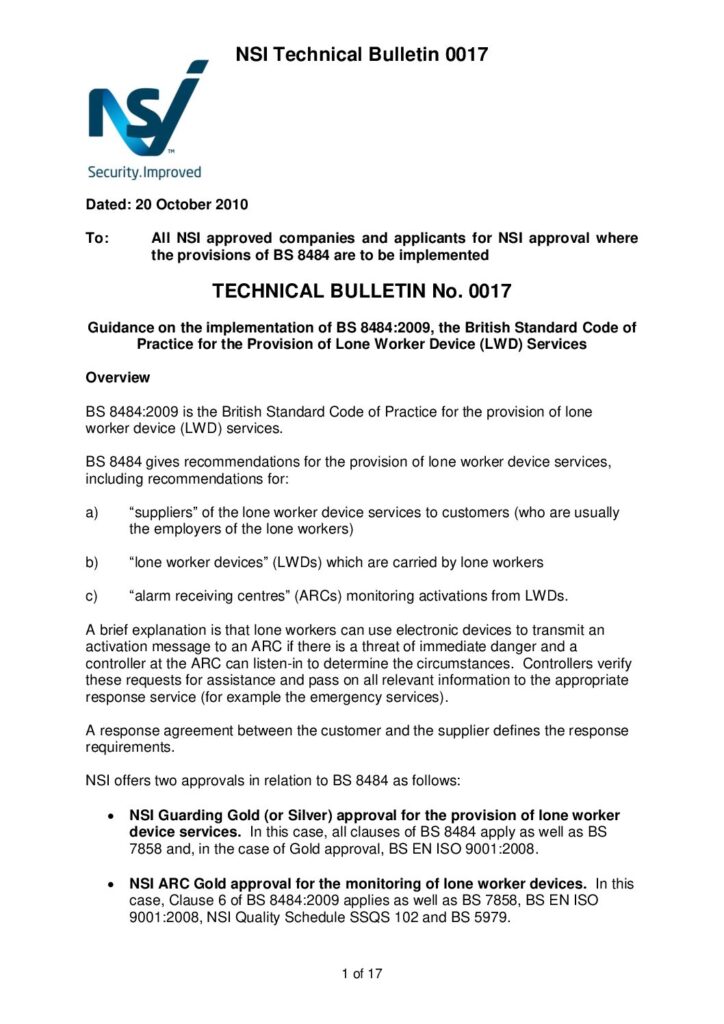
NSI Technical Bulletin 0017 provides guidance on the implementation of BS 8484:2009, the British Standard for Lone Worker Device (LWD) services. It outlines the responsibilities of suppliers, the functionality of LWDs, and the operational requirements for Alarm Receiving Centres (ARCs) that monitor these devices, emphasizing the importance of compliance for NSI approval. Key topics include mandatory features for LWDs, training requirements for users, and the protocols for responding to activation messages to ensure the safety of lone workers. Manual review is recommended for complete details.
Read MoreTech-Bulletin-0018-BS-8418-2010
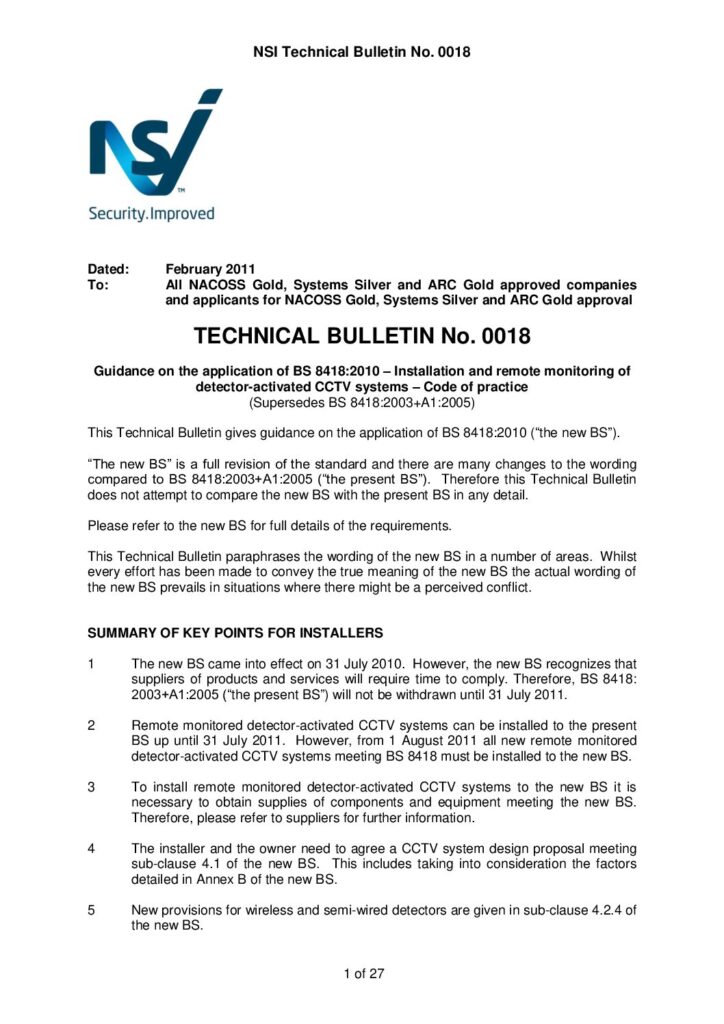
NSI Technical Bulletin No. 0018 provides guidance on the application of BS 8418:2010, which outlines the installation and remote monitoring requirements for detector-activated CCTV systems. Key points include the transition period for compliance, the necessity for documented agreements between installers, owners, and remote video response centers (RVRCs), and specific technical requirements such as power supply standards and maintenance protocols. The bulletin emphasizes the importance of collaboration among all parties to ensure effective system design, installation, and ongoing operation in accordance with the new standard. Manual review may be needed for complete details.
Read MoreTech-Bulletin-0020-BS-8484-2011
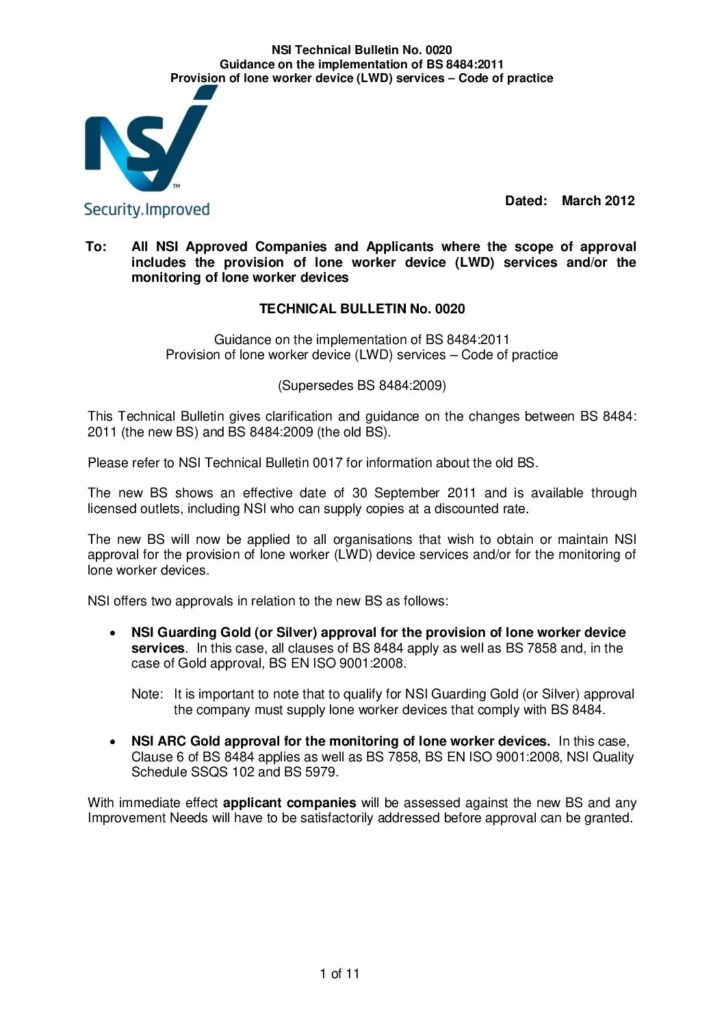
NSI Technical Bulletin No. 0020 provides guidance on implementing BS 8484:2011, which supersedes the previous standard BS 8484:2009, for the provision of lone worker device (LWD) services. The bulletin outlines the mandatory compliance requirements for NSI approval, including the necessity for companies to address any Improvement Needs by September 2012, and details significant changes in the new standard, such as enhanced data security measures and the need for a documented data handling policy. It also emphasizes that all organizations providing LWD services must adhere to the new standards to maintain their NSI approval.
Read MoreTech-Bulletin-0021-BS-8243-Intruder-and-H-up-alarms
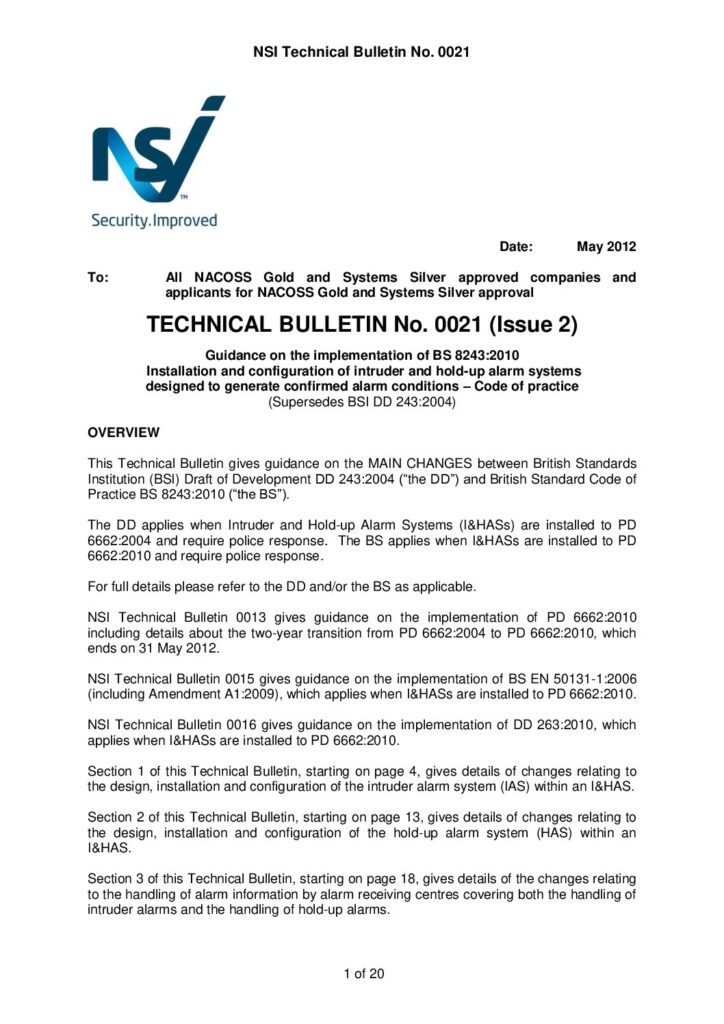
NSI Technical Bulletin No. 0021 provides guidance on the implementation of BS 8243:2010, which outlines the installation and configuration of intruder and hold-up alarm systems (I&HAS) designed to generate confirmed alarm conditions. The document details significant changes from the previous standard, including mandatory requirements for hold-up alarm confirmations under certain conditions, updated definitions, and specific design and installation recommendations aimed at minimizing false alarms. Compliance with these guidelines is essential for organizations seeking to maintain NSI approval for electronic security systems. Manual review is recommended for complete details.
Read MoreNSI-Technical-Bulletin-0028-on-BS-8473
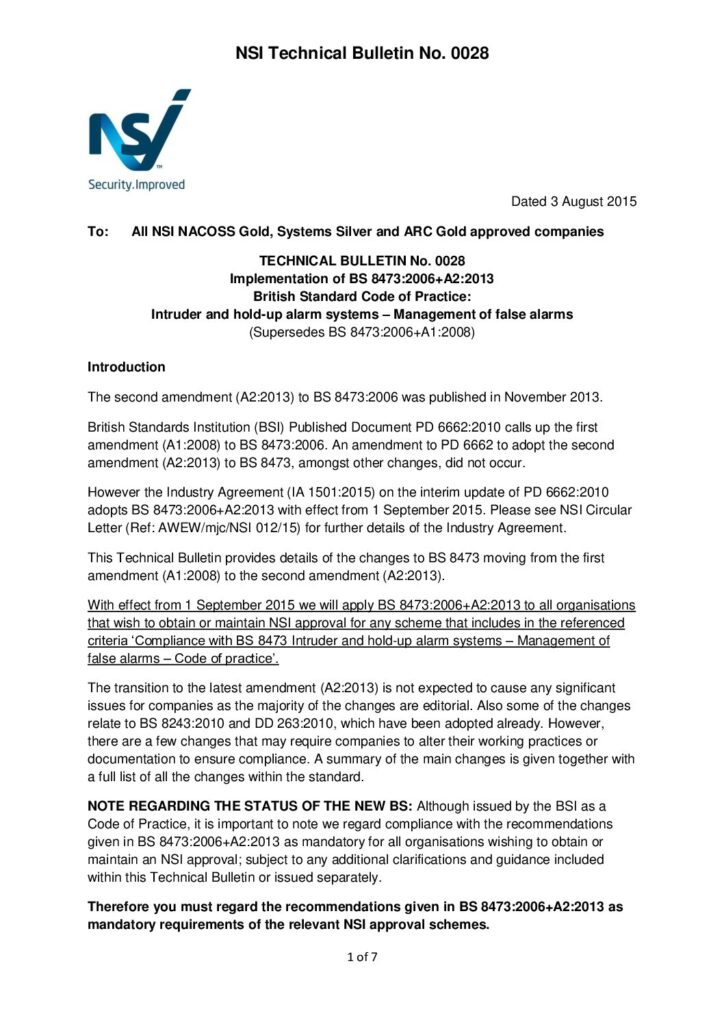
NSI Technical Bulletin No. 0028 outlines the implementation of the updated British Standard BS 8473:2006+A2:2013 concerning intruder and hold-up alarm systems, specifically focusing on the management of false alarms. Effective from September 1, 2015, compliance with the new standard is mandatory for organizations seeking NSI approval, with most changes being editorial in nature. Key amendments include terminology updates, integration of additional standards, and clarifications on maintenance and documentation practices, which may require companies to adjust their procedures to ensure compliance. Manual review recommended for complete details.
Read MoreNSI-Technical-Bulletin-0041-NSI-CoP-NCP-104-Issue-3
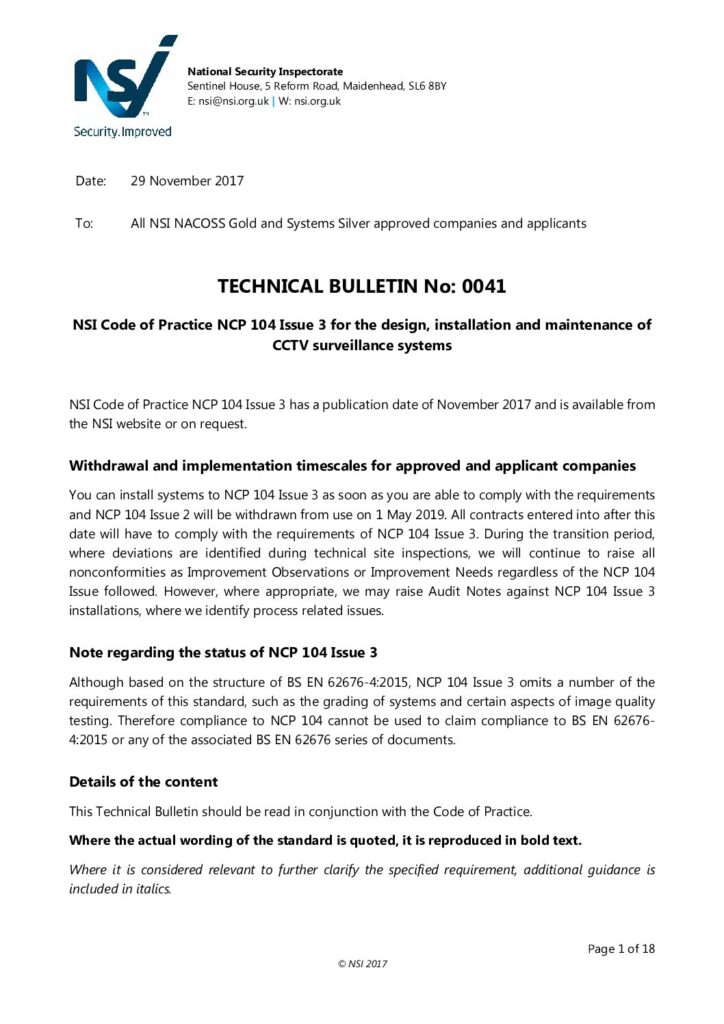
National Security Inspectorate Sentinel House, 5 Reform Road, Maidenhead, SL6 8BY E: nsi@nsi.org.uk | W: nsi.org.uk Page 1 of 18 © NSI 2017 Date: 29 November 2017 To: All NSI NACOSS Gold and Systems Silver approved companies and applicants TECHNICAL BULLETIN No: 0041 NSI Code of Practice NCP 104 Issue 3 for the design, installation…
Read MoreNSI-Technical-Bulletin-0054-Publication-of-BS-EN-50131-1-A3_2020
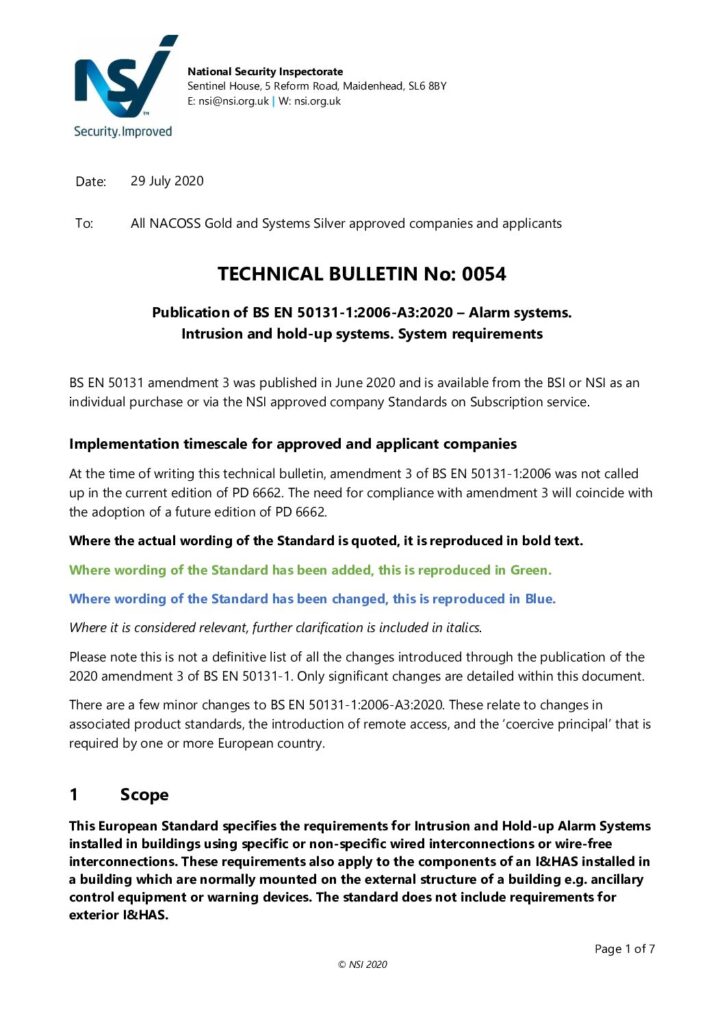
The document is a technical bulletin from the National Security Inspectorate regarding the publication of BS EN 50131-1:2006 – A3:2020, which outlines requirements for intrusion and hold-up alarm systems. It highlights the publication of amendment 3 in June 2020, details the implementation timeline for compliance, and notes significant changes, including updates to remote access protocols and the introduction of new definitions and requirements. The bulletin also emphasizes the importance of compliance with the standard as it relates to future editions of PD 6662 and includes clarifications on various technical aspects of alarm systems. Manual review may be needed for complete details on all changes introduced.
Read More